


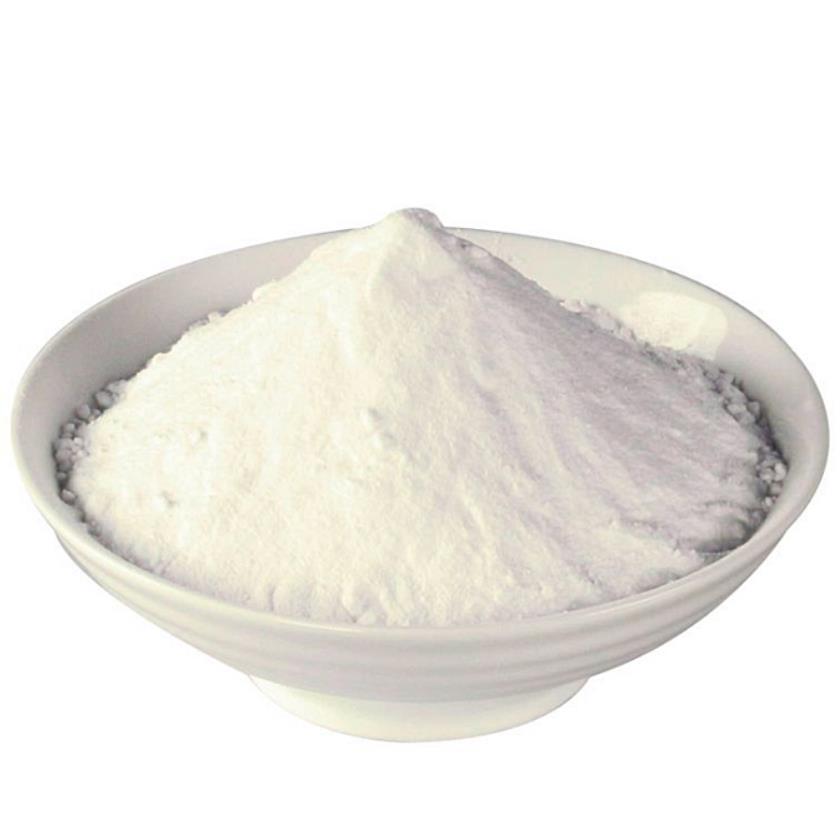
B2B White Paper | Raw Material Guide for Supplement Raw Materials Procurement & Formulation
Executive Summary
This guide provides a technical framework for interpreting Certificates of Analysis (COA) for Glucosamine bulk. For B2B buyers of Glucosamine powder, the COA is the primary risk-control document for assay purity, elemental impurities, and residual solvents. Failure to validate these three pillars results in direct compression failures, regulatory holds, and batch recalls.
1. Technical Specifications & Physicochemical Comparison
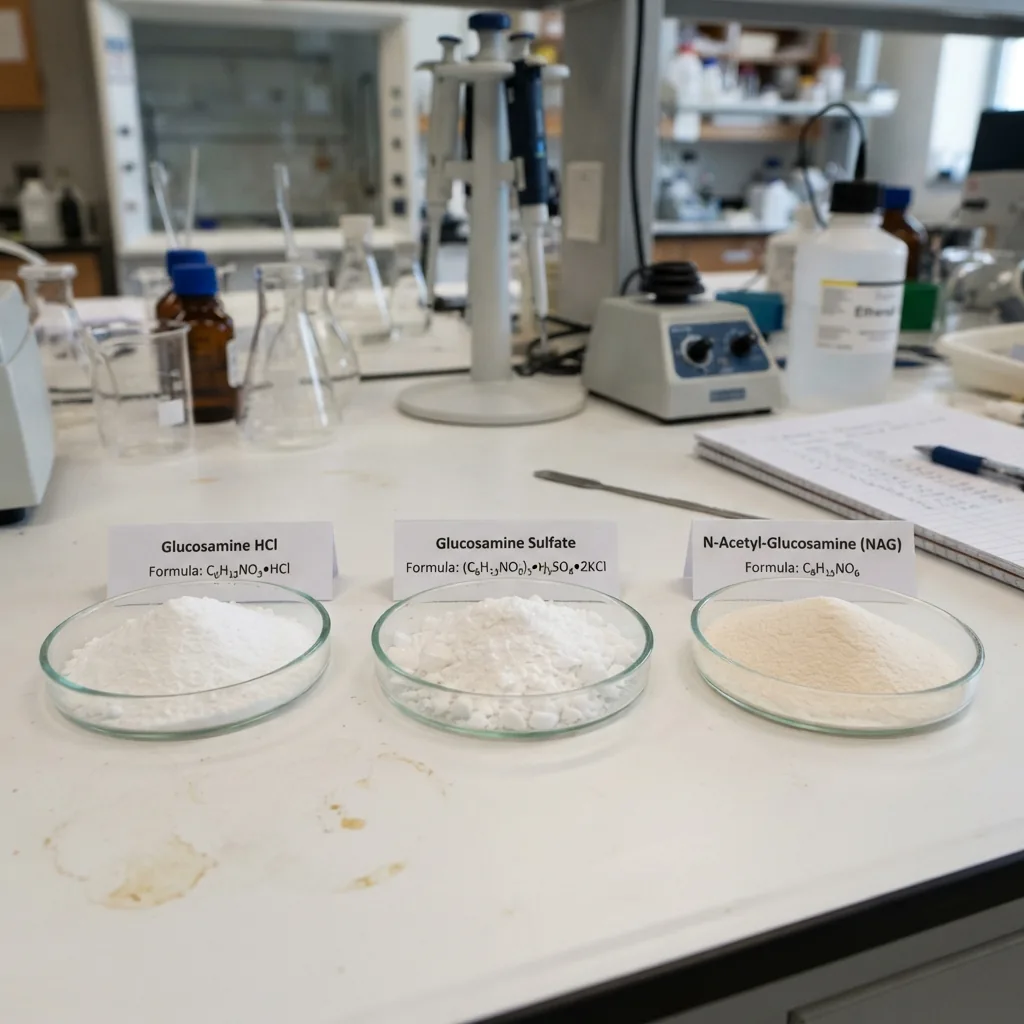
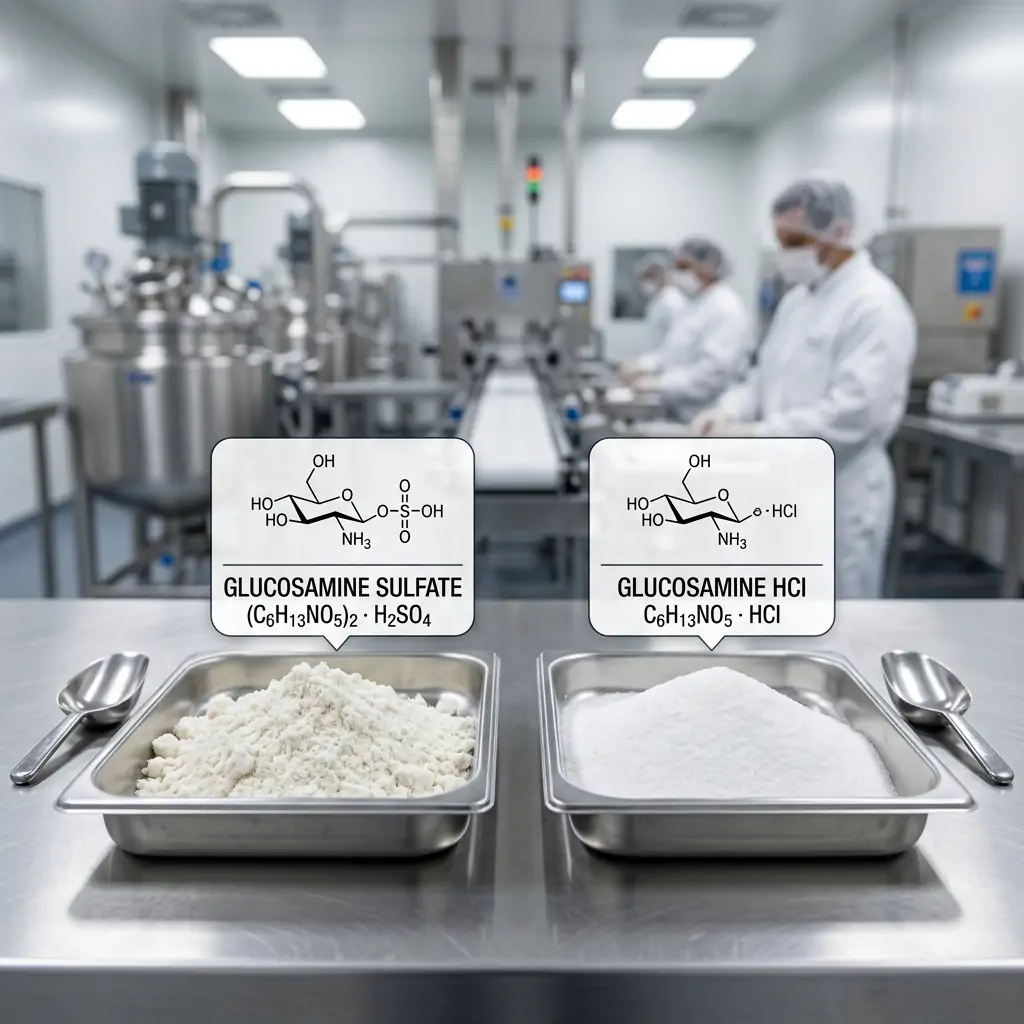
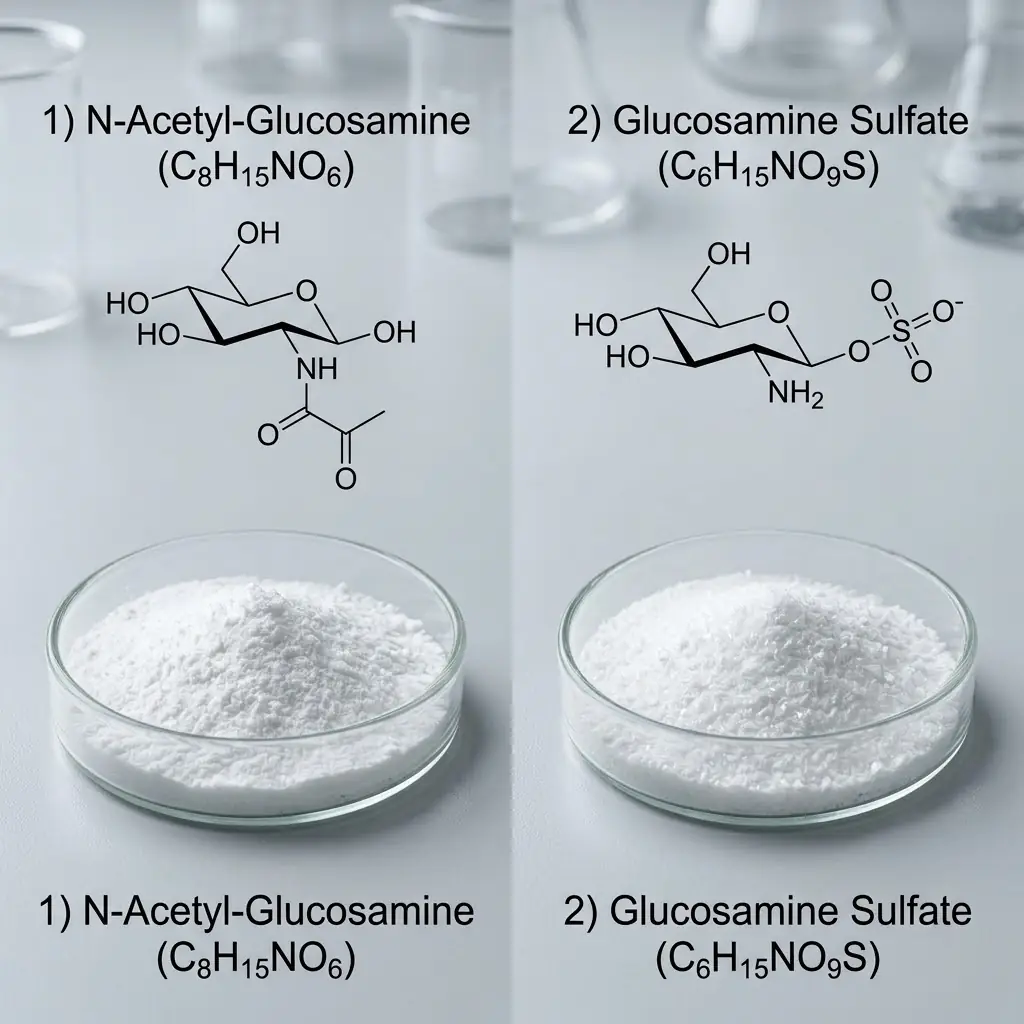
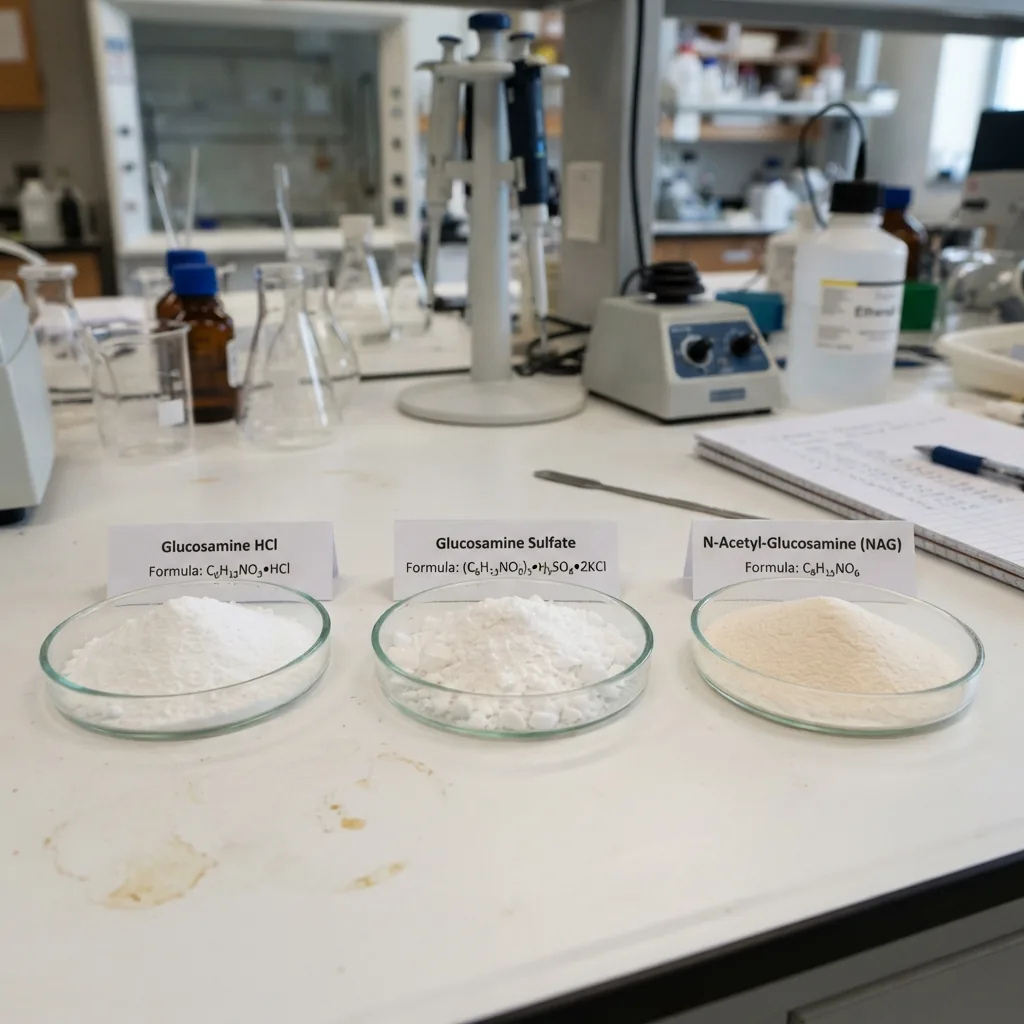
Glucosamine raw material is commercially supplied as two distinct salts: Glucosamine HCl (C6H13NO5·HCl) and Glucosamine Sulfate stabilized as 2KCl or 2NaCl complex. The HCl form delivers higher net active content and superior process stability, while the sulfate form requires salt complexation for chemical stabilization.
This distinction is critical for any Glucosamine manufacturer qualification, as it dictates active yield, hygroscopicity, and dosage form compatibility.
1.1 Stoichiometric Profile and Active Base Yield
Active base yield is determined by salt complexation stoichiometry, not total powder weight. Glucosamine HCl provides the highest net glucosamine base per gram.
| Parameter | Glucosamine HCl | Glucosamine Sulfate 2KCl | Glucosamine Sulfate 2NaCl |
|---|---|---|---|
| Molecular Formula | C6H13NO5·HCl | (C6H13NO5)2SO4·2KCl | (C6H13NO5)2SO4·2NaCl |
| Molecular Weight | 215.63 g/mol | 605.52 g/mol | 573.31 g/mol |
| Net Glucosamine Base Content | 83.1% | 59.2% | 62.4% |
| Salt Load / Label Impact | None | ~24.6% KCl | ~20.4% NaCl |
| USP Monograph Reference | USP Glucosamine HCl | USP Glucosamine Sulfate Potassium Chloride | USP Glucosamine Sulfate Sodium Chloride |
Formulation Implication: To achieve 1500 mg glucosamine base, a formulator requires 1805 mg Glucosamine HCl vs. 2534 mg Glucosamine Sulfate 2KCl. This 40% mass difference directly impacts capsule fill weight, tablet size, and excipient ratio.
1.2 Raw Material Specifications
Qualified Glucosamine bulk must meet pharmacopeial assay purity and defined physical properties to ensure processability in automated OEM/ODM lines.
| Attribute | Specification | Test Method | E-E-A-T Control Point |
|---|---|---|---|
| Assay Purity | ≥ 98.0% – 102.0% (dried basis) | HPLC with RI detection per USP | Low assay indicates residual salts or degraded base |
| Identification | IR spectrum conforms to RS | FTIR per USP <197> / EP 2.2.24 | False ID indicates adulteration |
| Appearance | White to off-white crystalline powder | Visual / USP <631> | Yellow/brown tint indicates Maillard precursors |
| Particle Size Distribution | DC Grade: 100% through 20 mesh, >90% through 40 mesh, <20% through 80 mesh. Fine Grade (RTM): 100% through 80 mesh | Sieve analysis USP <786> | Impacts flowability and content uniformity |
| Bulk Density | 0.55 – 0.75 g/mL | USP <616> | Low bulk density = high capping risk |
| Tapped Density | 0.75 – 0.95 g/mL | USP <616> | Carr’s Index >25% requires glidant |
| Water Content / LOD | ≤ 1.0% (HCl), ≤ 2.0% (Sulfate KCl) | Karl Fischer USP <921> / LOD USP <731> | Critical for hygroscopic caking prevention |
| pH (2% aq. solution) | 3.0 – 5.0 | Potentiometric USP <791> | pH <3.0 indicates excess residual HCl |
1.3 Physicochemical Behavior
Glucosamine HCl exhibits superior thermal and moisture stability compared to Glucosamine Sulfate, which is inherently hygroscopic and prone to caking under RH >60%.
- Aqueous Solubility: Glucosamine HCl = ~320 mg/mL at 25°C; Glucosamine Sulfate 2KCl = ~250 mg/mL at 25°C. Both exhibit pH-independent solubility in pH 2.0 – 7.0 range.
- pH Stability Spectrum: Stability = Maximum at pH 3.5 – 5.0. Degradation rate accelerated at pH >6.5 and Temperature >60°C via deamination and Maillard browning.
- Hygroscopicity Profile: Glucosamine HCl = Slightly hygroscopic, Deliquescence RH = ~84%. Glucosamine Sulfate 2KCl = Highly hygroscopic, Deliquescence RH = ~65%, Caking onset at RH >55% within 4 hours.
- Thermal Stability: Decomposition onset = 185-195°C (DSC). Stable for <15 min at 120°C in dry state; unstable in aqueous solution >80°C.
1.4 Excipient Interactions
Glucosamine is a primary amine sugar that reacts with carbonyl groups and acidic matrices, requiring incompatibility screening in multi-ingredient supplement raw materials blends.
- Organic Acids (Citric/Malic): High incompatibility in RTM powders at RH >60%. Mitigation requires coated acid particles or desiccant-equipped barrier packaging.
- Mineral Salts (Calcium Carbonate, DCP): Low chemical interaction but high dilution effect. High mineral load reduces powder flow (Angle of Repose >45°).
- Vitamin Matrices (Ascorbic Acid): Moderate interaction. Ascorbic acid accelerates oxidation; requires separate premix granulation step.
1.5 Synthesis & Production Routes
Commercial Glucosamine powder is produced via three routes with divergent allergen, vegan, and batch-to-batch consistency profiles.
- Crustacean-Derived Acid Hydrolysis: Chitin from shrimp/crab shells → HCl hydrolysis (80-100°C, 4-6h) → Deacetylation → Crystallization. Risk: Tropomyosin allergen carryover (requires <2.5 ppm protein via ELISA).
- Bio-Fermentation (Vegan/Non-Animal): Aspergillus niger fermentation of glucose/corn starch → Purification and HCl salt formation. Attribute: Allergen-free, BSE/TSE-free, year-round stability, preferred for Halal, Kosher, Vegan certifications.
- Chemical Synthesis: Limited commercial scale due to low stereoselectivity and high residual solvent burden.
2. Dosage Form Manufacturing & Processing Matrix
Dosage form selection dictates the required particle engineering grade and thermal/moisture barrier strategy for Glucosamine raw material.
| Dosage Form | Thermal Tolerance | Optimal pH Range | Moisture Sensitivity / Barrier Needs | Plant-Floor Processing Insights |
|---|---|---|---|---|
| Gummies (Pectin/Gelatin) | Low: 75-85°C max slurry hold, <15 min | 3.2 – 4.0 (pectin set) | High. Requires dry-blend addition post-cook | Failure Mode: Maillard browning (amine + sugars at >90°C). Mitigation: Add Glucosamine HCl at 65°C during cool-down, use pectin HM 60° Rapid Set. |
| Hard Capsules (Gelatin/HPMC) | High: <40°C during encapsulation | N/A | Moderate-High. DC Grade required | Failure Mode: Powder bridging. Mitigation: 40-mesh DC grade, 0.5% colloidal SiO2 + 0.3% MgSt, Hausner Ratio <1.30. |
| Direct Compression Tablets | High: <50°C compression zone | N/A | High. Capping and lamination risk | Failure Mode: Capping due to elastic recovery. Mitigation: Pre-blend with MCC PH102 (30-40%), roller compaction, hardness 12-18 kP. |
| Ready-to-Mix (RTM) Powders | Ambient | 3.0 – 6.0 in final drink | Very High. Clumping and insolubles | Failure Mode: Hygroscopic caking and dissolution lag (>60s). Mitigation: 80-mesh fine grade, 1-2% tricalcium phosphate anti-caking, foil laminate WVTR <0.05 g/m2/day. |
| Liquid Supplements/Shots | Low: 85°C/30s max | 3.5 – 5.0 | Low but high microbial risk | Failure Mode: Precipitation and browning. Mitigation: Use Glucosamine HCl (not sulfate), 0.1% potassium sorbate, EDTA 0.01%. |
Critical Manufacturing Failure Modes and Mitigation
Plant-floor validation of Glucosamine bulk must anticipate hygroscopic caking, die-sticking, and amine-sugar reactions.
- Hygroscopic Caking: Root cause = Open handling of Glucosamine Sulfate at RH >60%. Plant control: Dehumidified suite (RH 35-45%, Temp 20-25°C), double PE liner with aluminum outer barrier.
- Die-Sticking and Picking: Root cause = High amine surface adhesion. Control: 0.75% sodium stearyl fumarate, CrN coated tooling, pre-compression 3-5 kN.
- Dissolution Lag: Root cause = Hydrophobic lubricant over-blending (>5 min MgSt). Control: External lubrication or 2 min low-shear MgSt addition.
3. Procurement & Supply Chain Parameters
Procurement of Glucosamine raw material is governed by MOQ scalability, barrier packaging integrity, and feedstock continuity.
3.1 Commercial and Packaging Specifications
Standard commercial packaging for Glucosamine bulk is engineered for moisture protection and export compliance.
- MOQ Structure: Pilot/sample: 1 kg – 10 kg. Commercial: 25 kg fiber drum with double PE inner liner + aluminum foil barrier bag. Full pallet: 500 kg – 1000 kg.
- Packaging Standard: Glucosamine HCl = Double LDPE liner (0.08mm) + outer fiber drum. Glucosamine Sulfate = Triple barrier (PE + Aluminum laminate + PE) mandatory, WVTR ≤0.1 g/m²/24h.
3.2 Lead Times and Feedstock Risk
Lead time and supply stability are directly linked to synthesis route.
- Lead Time: Stock grade: 7-10 days. Custom DC/agglomerated grade or vegan fermentation grade: 15-25 days. Custom premix blends (Glucosamine + Chondroitin + MSM): +5 days.
- Feedstock Risk: Crustacean route = High seasonal variability, shrimp price volatility. Bio-fermentation route = Low, year-round corn starch feedstock, controlled via fermentation capacity 100-500 MT/month.
3.3 Technical Documentation Portfolio
A qualified Glucosamine manufacturer must provide a complete dossier for regulatory filing.
Required docs: COA (batch-specific), TDS, SDS/MSDS per GHS Rev.9, Manufacturing Process Flowchart, Allergen Statement, BSE/TSE-Free Declaration, Non-GMO/Vegan Statement, Residual Solvent Statement per ICH Q3C, Heavy Metal Statement per USP <233>.
4. Quality Control, Compliance & Stability
The COA for Glucosamine bulk is a four-part technical verdict: assay purity verifies active strength, elemental impurities via ICP-MS verify toxicological safety, residual solvents verify process control, and microbiology verifies hygienic manufacturing.
4.1 COA Deciphering Protocol: Key Testing Metrics
This is the core quality control protocol procurement managers must enforce for every incoming lot.
| COA Parameter | Acceptance Criteria | Method | Red Flag for Rejection |
|---|---|---|---|
| Assay (Glucosamine HCl) | 98.0% – 102.0% | HPLC-RI / USP <621> | <97.5% or >102.5% indicates adulteration |
| Chloride Content (HCl form) | 16.0% – 17.0% | Titration USP <221> | <15.5% = low salt formation |
| Heavy Metals – Lead (Pb) | ≤ 0.5 ppm | ICP-MS USP <233> | >0.5 ppm = environmental contamination |
| Arsenic (As) | ≤ 1.0 ppm | ICP-MS USP <233> | >1.0 ppm = process water issue |
| Cadmium (Cd) | ≤ 0.1 ppm | ICP-MS USP <233> | >0.1 ppm = equipment corrosion, Prop 65 risk |
| Mercury (Hg) | ≤ 0.1 ppm | ICP-MS / Cold Vapor AAS | Any detection = severe risk |
| Residual Solvents – Methanol | ≤ 3000 ppm | GC-HS USP <467> | >3000 ppm indicates poor drying |
| Residual Solvents – Ethanol | ≤ 5000 ppm (Class 3) | GC-HS USP <467> | Prefer ≤2000 ppm for clean-label |
| Residual Solvents – Isopropanol | ≤ 5000 ppm (Class 3) | GC-HS USP <467> | Common crystallization solvent, must be quantified |
| Total Residual Solvents | No Class 1 solvents (Benzene <2 ppm) | GC-HS | Any Class 1 detection = automatic failure |
| Loss on Drying | ≤ 1.0% HCl, ≤ 2.0% Sulfate | USP <731> / Karl Fischer <921> | High LOD = caking and microbial risk |
| Micro – Total Aerobic Count | ≤ 1000 cfu/g | USP <61> | >1000 cfu/g indicates GMP failure |
Expertise Note: Why ICP-MS vs. AAS? ICP-MS per USP <233> is the current regulatory standard, replacing wet-chemistry USP <231>. ICP-MS provides LOD = 0.01 ppm for Pb/Cd/Hg. Require your Glucosamine manufacturer to report actual values (e.g., Pb = 0.12 ppm), not merely “<0.5 ppm”.
4.2 Regulatory Compliance Pathways
Global market access for Glucosamine raw material requires multi-jurisdictional compliance verification.
| Jurisdiction | Regulatory Status | Requirement for B2B Buyer |
|---|---|---|
| US FDA | Dietary Ingredient (Pre-DSHEA for crustacean; NDI for vegan fermentation). GRAS limited | Request NDI acknowledgement letter or pre-DSHEA evidence; cGMP per 21 CFR 111 |
| EU EFSA | Food Supplement per Directive 2002/46/EC. Vegan HCl = Novel Food authorized (EU 2017/2470) | Require Novel Food authorization number for vegan grade |
| China | GB 1903.38-2022 Food Nutrition Fortifier Standard | COA must meet GB standard: Assay ≥98%, Pb ≤1.0 mg/kg |
| Global Certifications | ISO 22000:2018, FSSC 22000, HACCP, NSF-cGMP, Halal, Kosher, Non-GMO, Vegan | Request certificates with valid scope covering Glucosamine HCl / Sulfate manufacturing |
4.3 Shelf Life & Storage Protocol
Stability of Glucosamine powder is moisture-driven, not oxidative; barrier control determines real-time shelf life.
- Real-Time Stability: 24-36 months at <25°C, RH <60% in unopened original packaging. Assay loss <1.0% at 24 months for HCl form.
- Accelerated Stability: 40°C/75% RH for 6 months per ICH Q1A. Failure criterion = LOD >2.0% and assay drop >2.0%.
- Storage Protocol: Temperature 15-25°C, RH 35-60%, palletized off-floor. Double PE liner resealed after partial use, desiccant replaced, use within 30 days after opening.
5. B2B Market Insights & Sourcing Trends
The Glucosamine bulk market is undergoing a structural shift from crustacean-dependent supply to non-animal bio-fermentation and engineered direct-compression grades.
5.1 Cost Drivers
Cost drivers for supplement raw materials are feedstock and processing complexity, not arbitrary pricing.
- Feedstock Supply: Crustacean chitin price = Variable, linked to shrimp aquaculture yield. Fermentation glucose price = Stable, linked to corn starch commodity index.
- Salt Complexation Processing Cost: Glucosamine Sulfate = Additional crystallization step to bind 2KCl/2NaCl, higher drying energy due to hygroscopicity.
5.2 Technological Evolution
Technological evolution is defined by allergen-free fermentation and particle engineering for automation.
- Shift to Non-Shellfish Bio-Fermentation: Driver = Clean-label demand + allergen-free claim + Halal/Vegan eligibility. Attribute: Fermentation-derived Glucosamine HCl = Tropomyosin <2.5 ppm, BSE/TSE-free.
- Direct-Compression Granular Processing: Innovation = Roller-compacted DC grade with bulk density 0.65-0.75 g/mL, Carr’s Index <20%, flow time <10s/100g. Benefit: Eliminates wet granulation step.
5.3 Downstream Formulator Trends
Downstream formulator trends favor transparency and allergen-free positioning over simple commodity cost.
- Clean-Label Demand: Requirement = “Shellfish-free”, “Non-GMO”, “Vegan” on label, traceable fermentation source, no Class 2 residual solvents.
- Allergen-Free Preference: EU and US brands migrating from Glucosamine Sulfate crustacean to Glucosamine HCl fermentation to avoid “Contains Shellfish” warning.
- Supply Chain Transparency: Demand for full chain of custody: raw chitin/corn source → fermentation/hydrolysis lot → purification lot → COA + TDS + allergen statement QR-linked.
Procurement Checklist: How to Qualify a Glucosamine Manufacturer
- Request ICP-MS Raw data:[STRIPPED]strong> Do not accept “Heavy Metals <10 ppm”. Demand Pb, As, Cd, Hg individual values via ICP-MS USP <233>.
- Verify Salt Form on COA: Confirm molecular weight and chloride content to avoid paying for KCl weight in Glucosamine Sulfate.
- Audit Residual Solvent Chromatogram: Ensure no Class 1 solvents and Class 2 < ICH Q3C limits with GC-HS USP <467> method.
- Validate Particle Grade: DC grade for tablets/capsules, fine 80-mesh for RTM/gummies. Ask for sieve analysis certificate.
- Confirm Fermentation vs. Crustacean: For vegan/allergen-free positioning, require A. niger source declaration + Vegan + Non-GMO certificates + Novel Food authorization (EU).
A technically competent Glucosamine manufacturer provides not just Glucosamine powder, but engineered supplement raw materials with documented stability, barrier packaging validation, and OEM/ODM premix capability for scalable commercial manufacturing.