


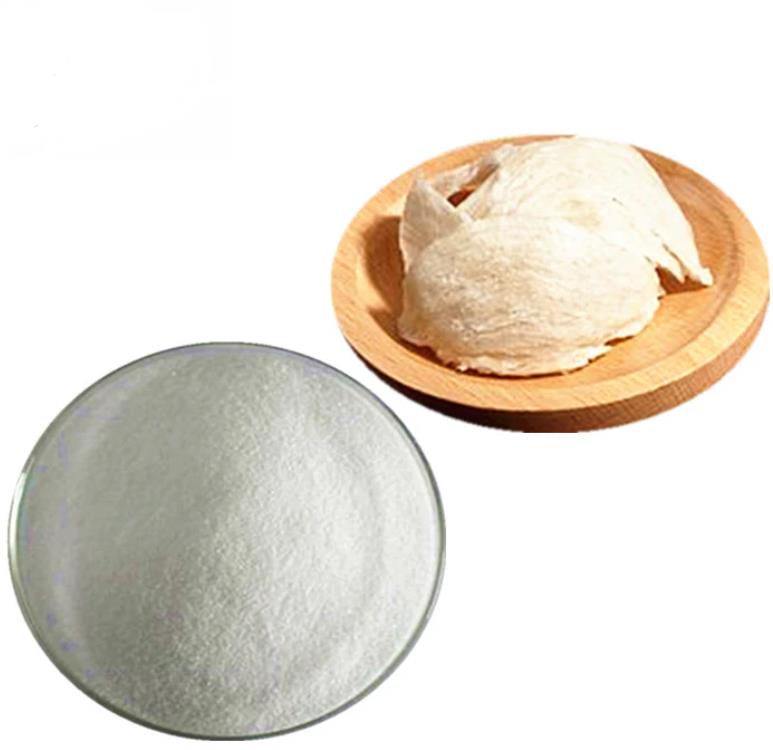
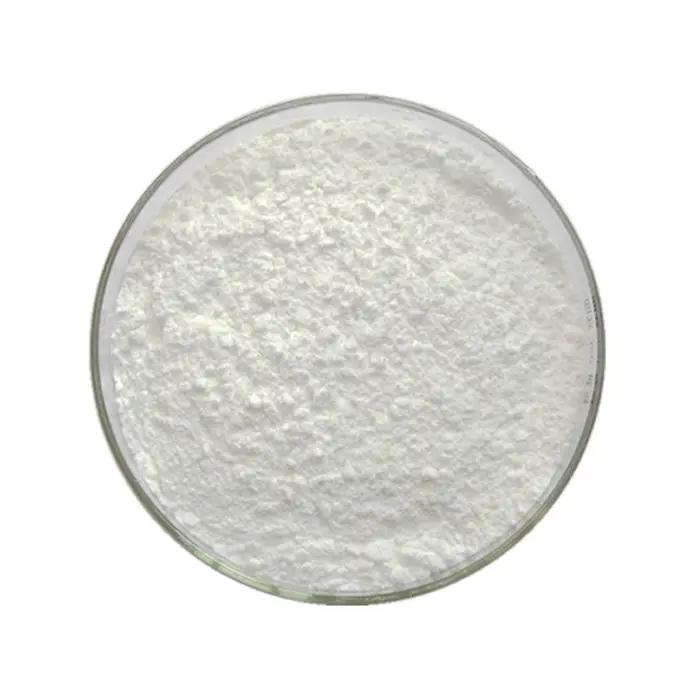
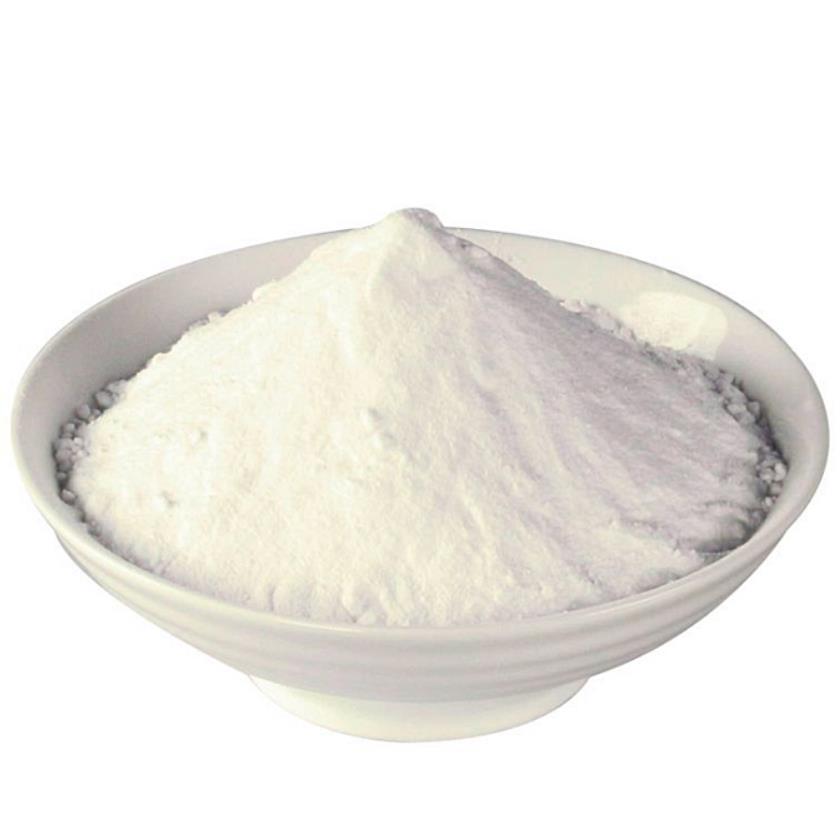
Glucosamine is an amino sugar and one of the most widely traded supplement raw materials in the joint-health category — and its quality is decided on the production floor, not on a sales page. Reliable Glucosamine Manufacturing depends on validated chitin sourcing, controlled acid hydrolysis at 80-90°C, and HPLC-verified assay at NLT 98.0% per USP. That process discipline determines the stability of Glucosamine (GlcN) in finished joint formulas and drives regulatory acceptance under 21 CFR 111. For procurement teams evaluating Glucosamine bulk supply, the decisive criterion is traceability — from raw chitin at the source to the sealed drum that reaches your blending line.
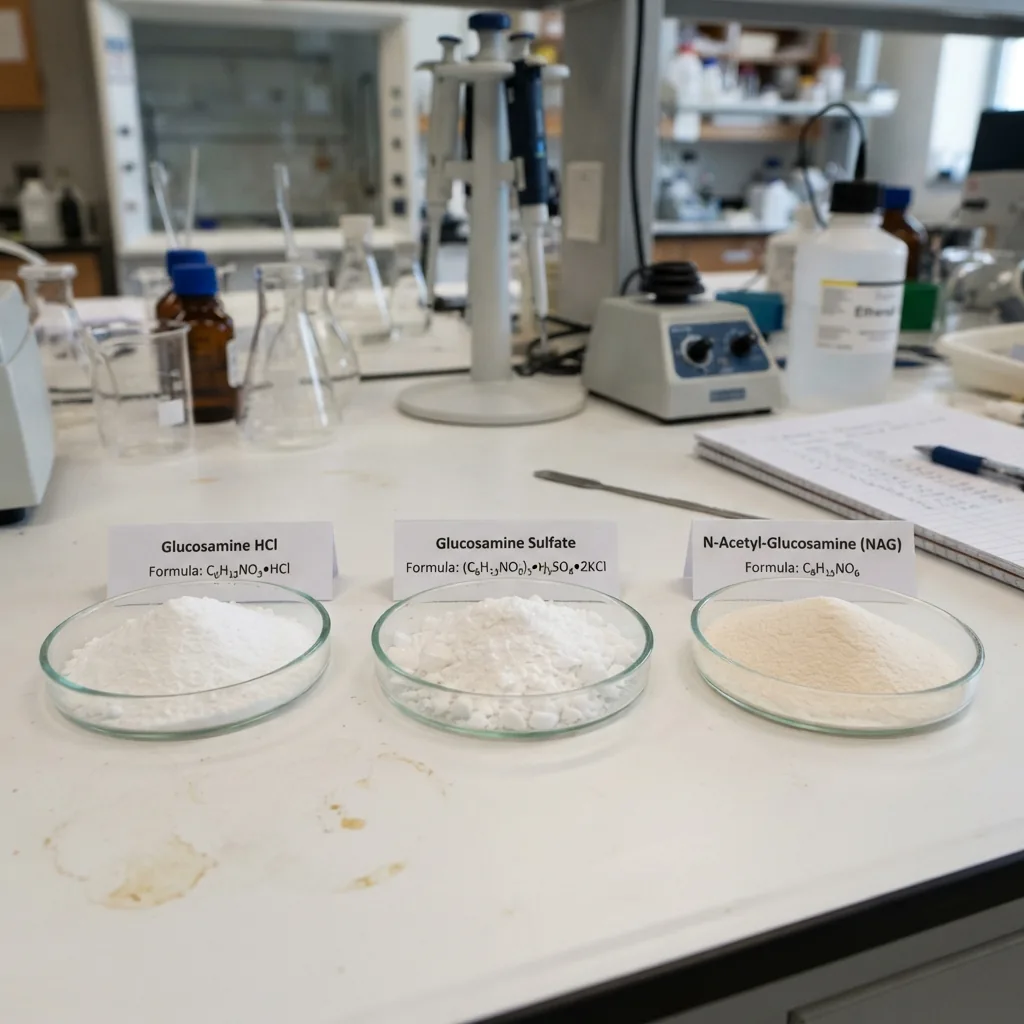
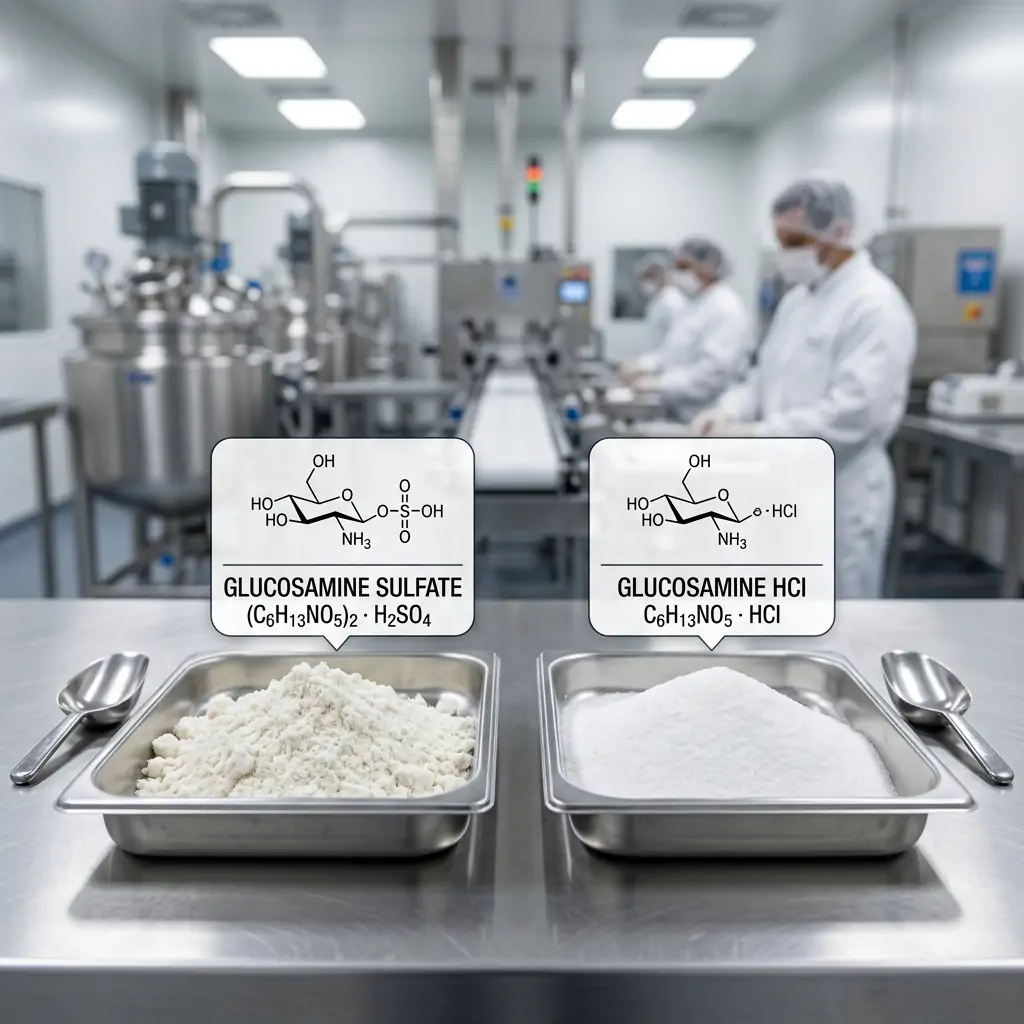
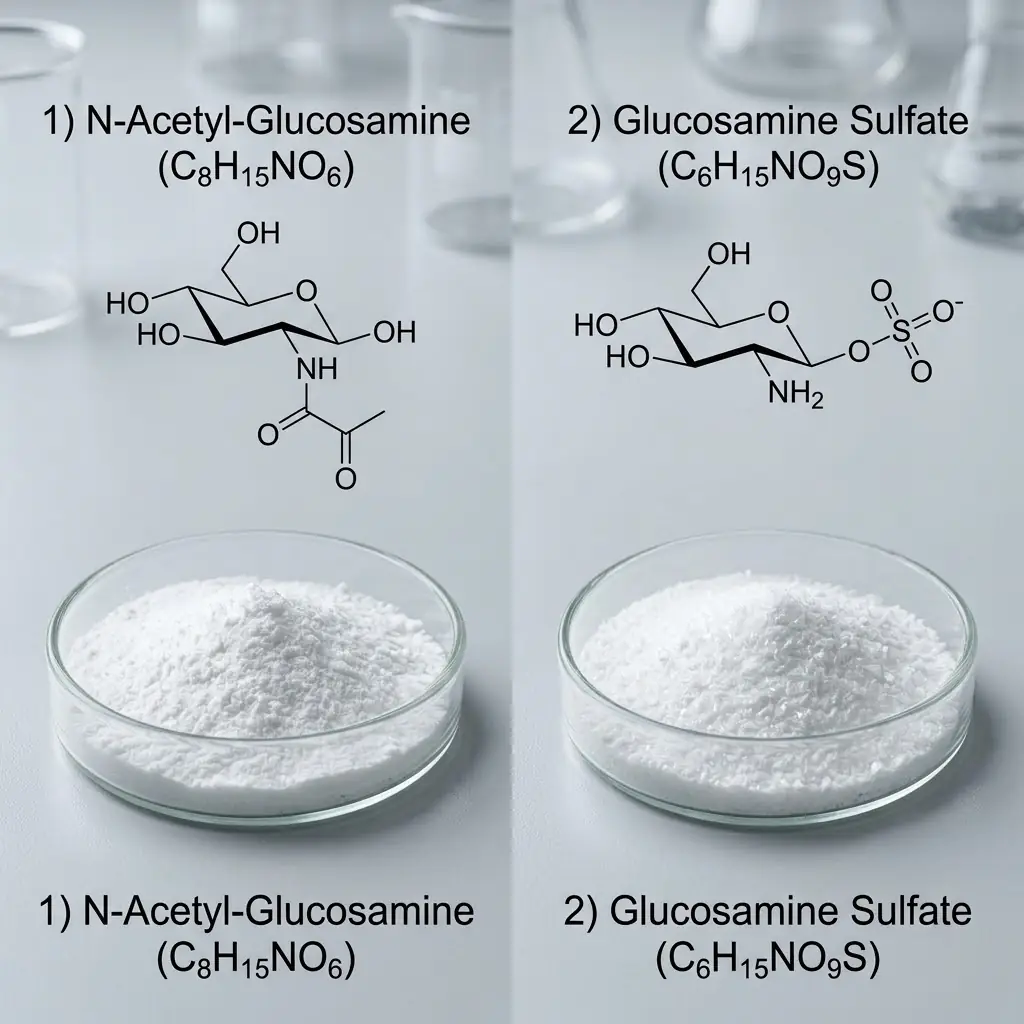
Glucosamine raw material enters global commerce as two dominant salts: Glucosamine Hydrochloride (CAS 66-84-2) and Glucosamine sulfate (CAS 29031-19-4). Both originate from chitin deacetylation, but they differ in counter-ion chemistry, glucosamine-base content, and bulk density. Formulators select between them based on sodium restrictions, solubility targets, and compatibility with co-ingredients such as chondroitin sulfate and MSM.
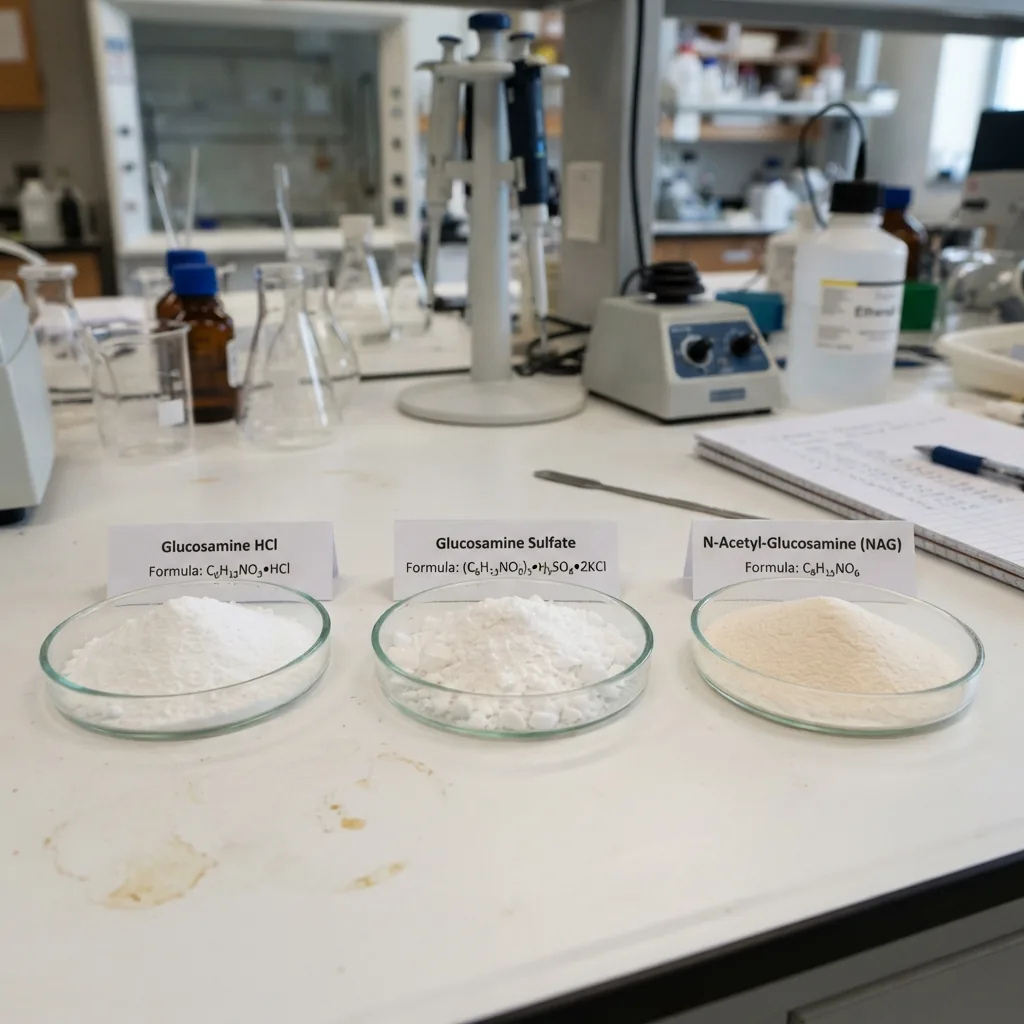
The short version for sourcing teams:
- Two salts dominate commercial supply: Glucosamine Hydrochloride (83% glucosamine base) and Glucosamine sulfate 2KCl (59% base), both covered by USP monographs
- Core process chain: chitin hydrolysis in 15-20% HCl at 80-90°C → crystallization → vacuum drying below 60°C → milling to particle specification
- Baseline acceptance: HPLC assay NLT 98.0%, heavy metals by ICP-MS, residual protein NMT 0.1%
- Non-negotiable documentation: lot-specific COA, complete batch records, allergen cleaning validation, GMP/ISO 22000/FSSC 22000 certificates
What Makes a Reliable Glucosamine Manufacturer for B2B Buyers
A reliable Glucosamine manufacturer maintains documented control from chitin lot to finished Glucosamine Powder, with batch records retained for at least one year past shelf life per FDA GMP. Production runs inside ISO 22000 certified facilities with 100,000-class cleanrooms and validated water systems meeting USP Purified Water conductivity below 1.3 µS/cm. Every lot should ship with a COA covering HPLC assay, loss on drying, and a full heavy metal panel.
Scale matters for supply continuity. Facilities producing 16 tons per day can support monthly 20-foot container orders without lot splitting, and pilot-trial MOQs should run under the same quality system as commercial volumes. Consistent capacity reduces cross-lot variability — a quiet but decisive advantage for brands running multi-market launches.
Critical Quality Indicators for Glucosamine Raw Material
Purity separates pharmaceutical-grade from food-grade Glucosamine Hydrochloride. Pharmaceutical grade requires assay of 98.0% to 102.0% by HPLC-RI or HPLC-ELSD per the USP monograph, while food-grade lots may test 95.0% to 98.0% and carry ash content above 0.5%.
Loss on drying must be NMT 1.0% at 105°C for 2 hours to prevent caking during storage. Residue on ignition typically runs NMT 0.5% for the hydrochloride and NMT 30.0% for the sulfate 2KCl complex due to its potassium chloride content, verified by the gravimetric method USP <731>.
Heavy metal control is critical for marine-derived chitin. Lead must be NMT 1.0 ppm, arsenic NMT 1.0 ppm, mercury NMT 0.1 ppm, and cadmium NMT 1.0 ppm by ICP-MS per USP <233>. For Glucosamine bulk, total plate count should be NMT 1,000 CFU/g and yeast and mold NMT 100 CFU/g per USP <61>.
Allergen and protein residues indicate incomplete purification. Residual protein by the Bradford method should be NMT 0.1% to control shellfish allergen risk, and chitin containing crustacean protein above 100 ppm requires allergen labeling under FALCPA in the US.
Raw Material Selection: Shellfish Chitin vs Fermentation-Derived
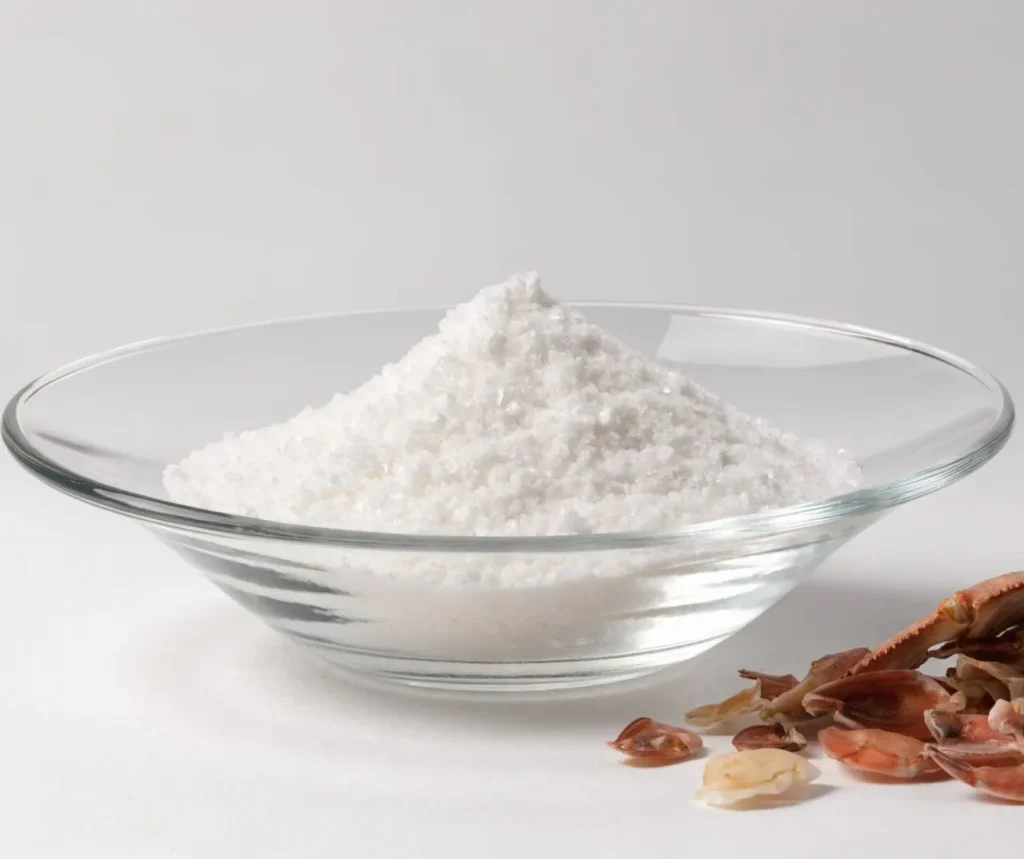
Traditional Glucosamine Manufacturing starts with chitin from shrimp and crab shells at a deacetylation degree above 90%. Chitin is sourced from Pandalus borealis or Litopenaeus vannamei with moisture NMT 10% and ash NMT 1.5% to optimize HCl consumption, and every incoming lot needs species identification plus a country-of-origin declaration.
Vegan fermentation uses Aspergillus niger or corn-derived glucose through the chitin synthase pathway, yielding the identical CAS 66-84-2 molecule without tropomyosin. Fermentation-derived Glucosamine (GlcN) eliminates the shellfish allergen entirely and qualifies for Vegan, KOSHER, and HALAL certifications, with typical yield of 45-55 g/L after 72-hour fed-batch fermentation.
Chitin supplier qualification should include pesticide screening for 200+ residues per EU Regulation 396/2005 and sulfite testing at NMT 10 ppm. Shellfish chitin stored above 25°C for more than 30 days shows elevated biogenic amines and requires retesting, so cold chain documentation from harvest to extraction directly reduces microbial load.
Manufacturing Steps: Hydrolysis, Conversion, and Purification
Chitin Hydrolysis
Chitin is hydrolyzed in 15-20% hydrochloric acid at 80-90°C for 6-10 hours with agitation at 60-80 RPM. The reaction cleaves β-1,4-glycosidic bonds and releases glucosamine hydrochloride into solution; completion is monitored by free amino nitrogen rising to 4.5-5.0% w/v.
Crude hydrolysate is filtered through 1-5 micron polypropylene to remove insoluble cuticle, then decolorized with food-grade activated carbon at 0.5-1.0% w/v and 65°C for 30 minutes. Carbon must show an iodine number above 900 mg/g per ASTM D4607.
Conversion to Glucosamine Hydrochloride and Glucosamine Sulfate
Glucosamine Hydrochloride crystallizes directly from the hydrolysate after concentration to 45-50 Brix and cooling to 5-10°C for 12 hours. Crystals are centrifuged at 1,200 G, washed with 95% ethanol to remove residual HCl, and the final pH of a 1% solution falls between 3.5 and 5.0.
Glucosamine sulfate is produced by neutralizing the hydrochloride with potassium or sodium hydroxide, then reacting with sulfuric acid at a 2:1:1 molar ratio to form the stabilized 2KCl complex. Sulfate 2KCl contains 59% glucosamine base and 19% potassium chloride by mass, while the sodium chloride variant contains 76% glucosamine base without potassium.
Stabilization is not optional: unsalted sulfate is hygroscopic and deliquesces within 24 hours at 60% RH, so co-crystallization with KCl or NaCl is mandatory. Vacuum drying at 50-55°C and 0.08 MPa prevents thermal degradation above 60°C, and the degradation product glucosamine lactam must be NMT 0.3% by HPLC.
Drying and Milling to Glucosamine Powder
Wet cake is dried in a double-cone or fluid bed dryer to moisture NMT 0.8%, producing Glucosamine Powder suitable for capsules and tablets. Inlet air is held at 60-70°C with outlet at 40-45°C to avoid browning, over 4-6 hours per 500 kg batch.
Milling uses a pin mill with a 60-100 mesh screen to reach particle size D90 <150 µm for direct-compression tablets. Bulk density targets run 0.55-0.75 g/mL for the hydrochloride and 0.65-0.85 g/mL for sulfate 2KCl, and over-milling below D50 20 µm raises electrostatic charge and pushes the flowability index above 30.
Certification Requirements for Supplement Raw Materials
Certification depth determines market access for any Glucosamine manufacturer. ISO 9001:2015 covers the quality management system, ISO 22000:2018 covers food safety, and FSSC 22000 Version 6 adds unannounced audits. US FDA facility registration under 21 CFR Part 117 is mandatory for supplement raw materials sold in the US market.
GMP compliance should reference NSF/ANSI 455-2 or EU GMP Chapter 3 for premises. The HACCP plan must include CCPs for acid concentration and drying temperature with documented critical limits, and BRCGS Food Safety Issue 9 Grade A or B is increasingly required by EU retail supplement brands.
Vegan, HALAL, KOSHER, and PJPH certifications require separate audits for shellfish versus fermentation lines. Vegan certification by The Vegan Society prohibits animal-derived processing aids and requires cleaning validation at a 10 ppm limit, while allergen management under BRCGS demands swab testing at 2.5 µg protein per swab after every shellfish-to-vegan changeover.
Supplier Audit Checklist for Glucosamine Bulk Sourcing
An effective audit verifies hydrolysis reactor logs showing time, temperature, and HCl concentration for every batch of Glucosamine raw material. pH, conductivity, and optical rotation [α]D20 = +70° to +73° for a 2% solution should be recorded per batch, and traceability must link the chitin lot to the finished Glucosamine bulk lot within 4 hours.
The quality lab must operate HPLC-RI with IQ/OQ/PQ qualification and calibration every 6 months per USP <621>. Reference standards should be USP Glucosamine Hydrochloride RS with CoA and storage at 2-8°C, and retained samples must be kept for one year past expiry at 25°C/60% RH per ICH Q1A.
For suppliers offering multiple delivery formats, verify a 10,000-class pharma-grade R&D lab with capability across gummies, capsules, tablets, powders, liquids, and drops. Facilities developing 2,000+ formulations annually will hold real compatibility data for combining Glucosamine sulfate with MSM or collagen — request stability data in a gummy matrix at pH 3.2-3.8 and water activity 0.65 before committing.
- Chitin COA with species, deacetylation degree, and heavy metal panel by ICP-MS
- Reaction batch record with acid lot, time-temperature chart, and yield calculation of 75-85%
- Purification record: carbon lot and filtration integrity test at 2.5 bar
- Crystallization log: cooling curve, centrifuge RPM, wash solvent volume
- Drying curve: inlet/outlet temperature and LOD trending with SPC chart
- Final COA: assay by HPLC, LOD, residue on ignition, heavy metals, microbiology per USP <61>/<62>
- Allergen cleaning validation between shellfish and vegan lines
- Packaging: double PE liner inside 25 kg fiber drum with NMT 0.5% oxygen transmission
Red Flags in Glucosamine Supplier Communication
A supplier that cannot provide CAS 66-84-2 specific optical rotation data, or that relies on titration alone without an HPLC chromatogram, is cutting corners. USP requires specific rotation of +70° to +73° plus HPLC purity confirmation, and a missing chromatogram means no impurity profiling for 2-deoxy-2-amino-D-mannose.
Watch for COAs showing identical assay values across 10+ lots — 99.1% on every single batch, for example — when natural crystallization produces a standard deviation of 0.2-0.5%. Real Glucosamine Manufacturing shows variation driven by crystal size distribution; identical values point to a template COA rather than tested data.
If a supplier quotes Glucosamine sulfate without specifying KCl or NaCl content and reports “98% sulfate,” that is chemically impossible for the 2KCl complex. Correct labeling is 99% Glucosamine sulfate 2KCl containing 59% base, and mislabeling leads directly to under-dosing at the typical 1,500 mg/day effective dose.
A 3-day lead time for 5,000 kg Glucosamine bulk without inventory confirmation suggests a trading company rather than a factory. An authentic Glucosamine manufacturer needs 15-20 days of production plus 7 days of QC release per batch, and any immediate-shipment offer should be backed by lot-specific warehouse photos and an inventory aging report.
Specification Table for Glucosamine Raw Material
| Parameter | Specification for Glucosamine Hydrochloride | Test Method |
|---|---|---|
| Chemical Name | 2-Amino-2-deoxy-D-glucose hydrochloride | USP |
| Synonym | Glucosamine (GlcN) | N/A |
| CAS Number | 66-84-2 | CAS Registry |
| Molecular Formula | C6H13NO5·HCl | USP |
| Molecular Weight | 215.63 | Calculated |
| Assay | Per COA | HPLC-RI |
| Appearance | Per COA | Visual |
| Solubility | Per COA | USP <1236> |
| Loss on Drying | Per COA | USP <731> |
| Heavy Metals | Per COA | ICP-MS USP <233> |
FAQ
How do the hydrochloride and sulfate forms differ for formulation?
Glucosamine Hydrochloride delivers 83% glucosamine base while sulfate 2KCl delivers 59%, so the dose adjusts to deliver the standard 1,500 mg of base per day.
Which test method verifies glucosamine purity?
HPLC-RI or HPLC-ELSD per the USP monograph quantifies assay and related substances, with NLT 98.0% purity required for pharmaceutical grade.
What certifications does a manufacturer need to export to the US and EU?
ISO 22000, FSSC 22000, FDA facility registration, GMP, plus HALAL/KOSHER for specific markets.
What is the shelf life of bulk material, and how should it be stored?
24 months when held at 15-25°C and RH NMT 60% in sealed drums with double PE liners.
Is fermentation-derived glucosamine identical to shellfish-derived?
Yes — both yield CAS 66-84-2 with identical molecular weight (215.63) and optical rotation of +70° to +73°.
Can I request samples or small trial lots before committing to container volumes?
A qualified supplier runs sample programs and pilot MOQs under the same quality system as commercial production, each backed by a lot-specific COA and stability data.
What lead time should I plan for a standard batch?
15-20 days of production plus 7 days of QC release; verified stock can ship sooner with lot-specific documentation.
Related resources: Explore our Joint & Bone Health Ingredients portfolio and technical articles in the Glucosamine Knowledge Hub.
This article is provided by Gothink Biology, a dietary supplement manufacturer and raw material supplier based in Shenzhen, China.
Shenzhen Gothink Biology Technology Co., Ltd. offers OEM, ODM, CMO, and CDMO services from a GMP-certified 100,000-class cleanroom facility producing 16 tons daily. Certifications include ISO 9001, ISO 22000, HACCP, FDA, HALAL, GMP, KOSHER, BRC, FSSC 22000, PJPH, and Vegan. The R&D team — led by scientists with postdoctoral experience at Cold Spring Harbor Laboratory and Emory University — develops 2,000+ formulations annually across gummy, capsule, tablet, powder, liquid, and drop formats.
Ready to evaluate our glucosamine supply? Request a quote, a lot-specific COA, or a sample for your next formulation at https://gttsynbio.com/ or contact our technical team directly.