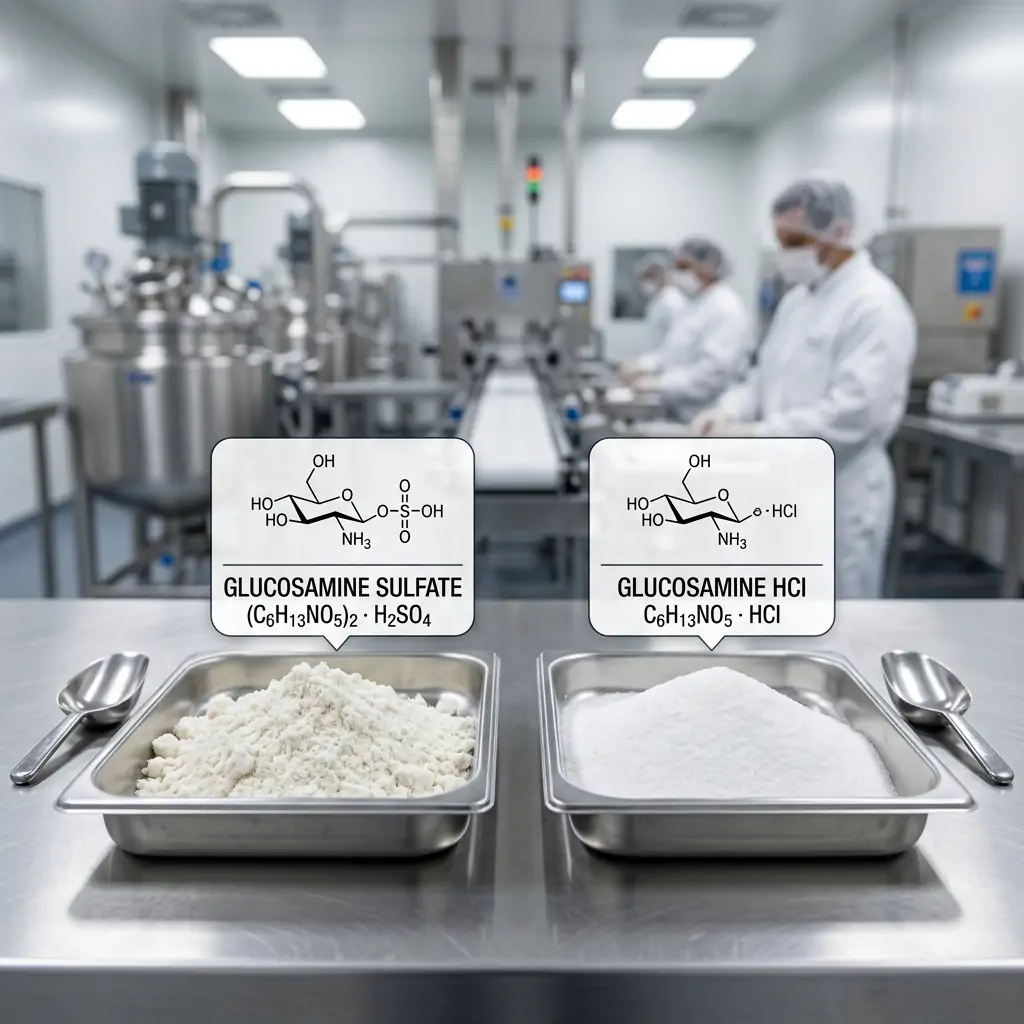



This guide provides a formulation-centric comparison of two primary supplement raw materials in joint health: Glucosamine Sulfate and Glucosamine HCl. This guide compares Glucosamine Sulfate raw material against HCl for stoichiometric dosing, line efficiency, finished product stability, and sourcing risk. For R&D formulators evaluating pilot-scale feasibility, request the current TDS/COA package and 1 kg pilot testing samples before locking a specification.
1. Technical Specifications & Physicochemical Comparison
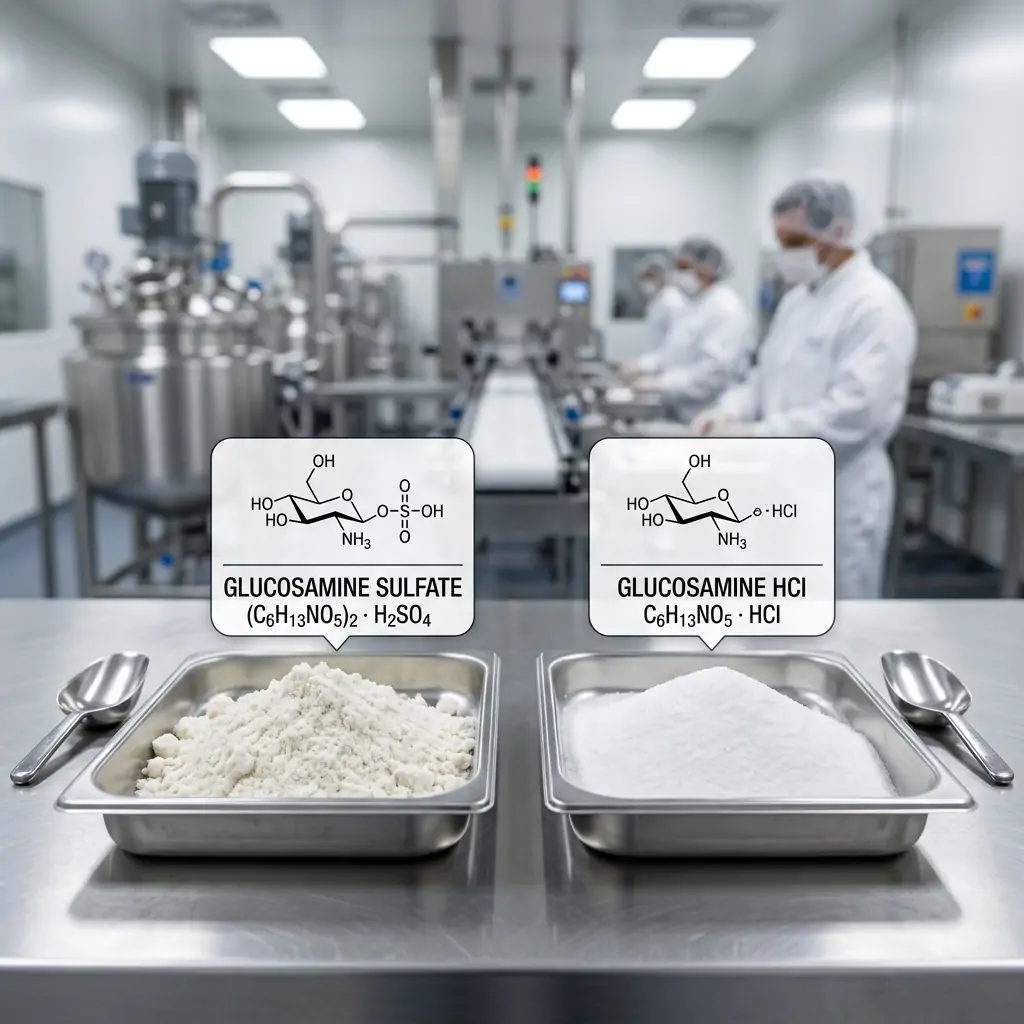
1.1 Chemical Profile & Stoichiometric Yield
The fundamental difference is salt stabilization and active base delivery.
- HCl form: Formula C6H13NO5·HCl; molecular weight 215.63 g/mol; active base content ~83% glucosamine base. Uncomplexed, single-molecule salt. Does not require inorganic salt stabilization. This yields higher potency per gram, critical for high-load tablets and capsules.
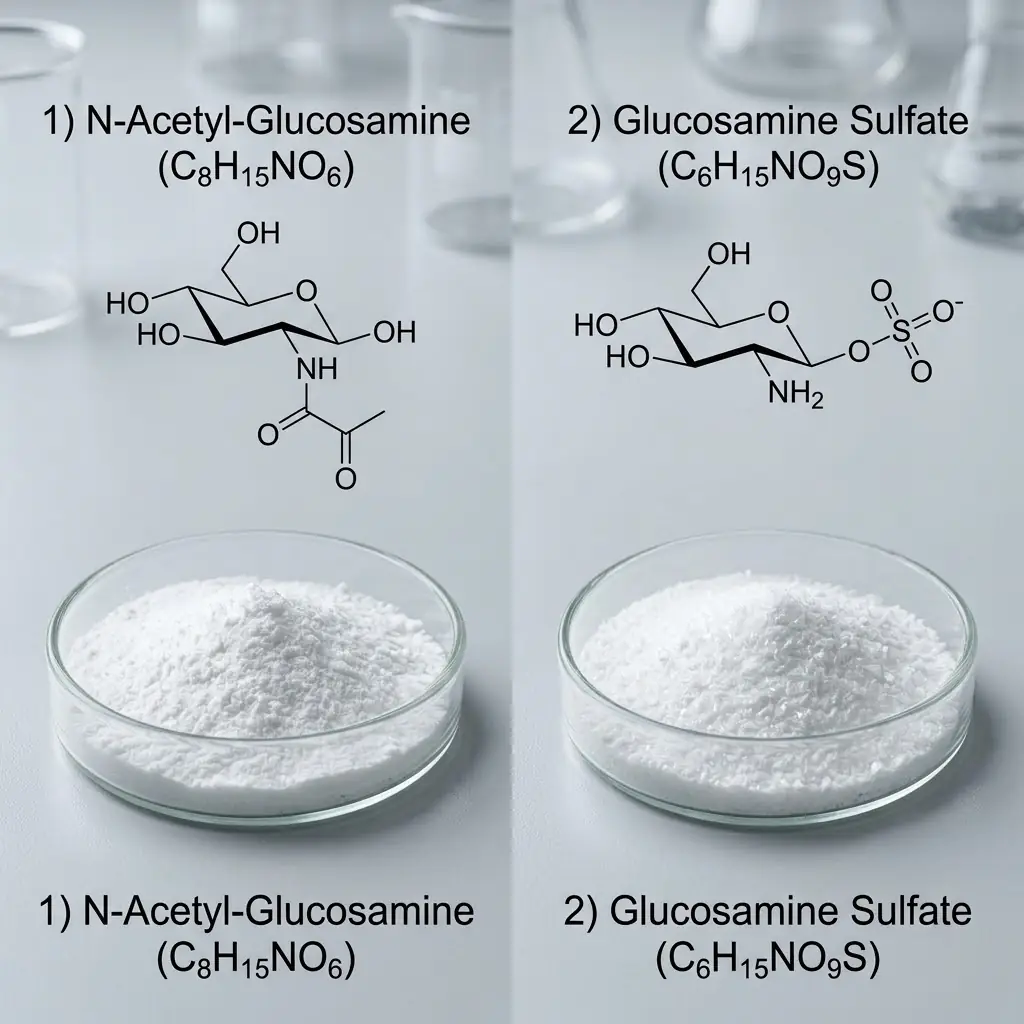
- Sulfate form: Commercial Glucosamine Sulfate raw material is not stable as pure sulfate. It is stabilized as a mixed salt complex. Glucosamine Sulfate 2KCl: (C6H14NO5)2SO4·2KCl, MW 605.52 g/mol, active base ~59%. Glucosamine Sulfate 2NaCl: (C6H14NO5)2SO4·2NaCl, MW 573.31 g/mol, active base ~62%. Implication: To deliver 1500 mg glucosamine base, formulators require ~1800 mg of HCl vs. ~2500–2600 mg of Glucosamine Sulfate powder as 2KCl complex. Sodium/potassium load from the stabilizing salt must be declared on the Supplement Facts and evaluated for hypertensive-sensitive formulations. A qualified Glucosamine Sulfate manufacturer will specify whether the complex is 2KCl or 2NaCl on the TDS.
1.2 Raw Material Parameters
| Parameter | Glucosamine HCl Standard | Glucosamine Sulfate (2KCl / 2NaCl) Standard |
|---|---|---|
| Assay (HPLC/ Titration) | 98.0% – 102.0% (USP) | 98.0% – 102.0% on anhydrous basis (USP/EP) |
| Particle Size | 80 mesh fine powder; 20-40 mesh DC grade coarse granules available | 80 mesh fine powder; DC grade less common due to friability |
| Bulk Density | 0.65 – 0.85 g/mL (fine), 0.70 – 0.90 g/mL (DC grade) | 0.60 – 0.80 g/mL, lower flow due to irregular crystal habit |
| Tapped Density | 0.85 – 1.05 g/mL | 0.80 – 1.00 g/mL |
| Appearance | White to off-white crystalline powder, odorless to faint fish-like | White to off-white crystalline powder, slight sulfur odor possible |
| Heavy Metals | Pb <1.0 ppm, As <1.0 ppm, Cd <0.5 ppm, Hg <0.1 ppm via ICP-MS; Total heavy metals <10 ppm per USP <231> | Same limits; KCl complex requires additional K/Na assay |
| Residual Solvents | Compliant with USP <467> / ICH Q3C Class 3 only, typically ethanol/isopropanol <5000 ppm | Compliant with USP <467> |
For Glucosamine Sulfate bulk procurement, specify DC grade when direct compression is planned. Standard 80 mesh requires pre-granulation for tablet hardness. To evaluate whether 2KCl or 2NaCl fits your line, request TDS/COA and a 1 kg pilot sample.
1.3 Physicochemical Behavior
- Solubility: Both forms are freely soluble. In purified water at 25°C, Glucosamine HCl solubility is ~300 mg/mL, Glucosamine Sulfate 2KCl ~250 mg/mL. In acidic media (pH 1.2-3.0), both exhibit rapid dissolution >95% within 15 min. Sulfate form shows marginally faster initial dissolution due to higher hydrophilicity of the complex.
- Hygroscopicity: Critical differentiator. Both are hygroscopic per DVS analysis, but Glucosamine Sulfate is classified as very hygroscopic. Moisture uptake at 25°C/75% RH over 24h: HCl 2.5-4.0%, Sulfate 2KCl 5.0-8.5%. Sulfate form deliquesces above 80% RH, leading to caking in fiber drums if PE liners are compromised.
- Thermal Stability: Decomposition onset by DSC: HCl ~200-210°C, Sulfate 2KCl ~190-195°C. Both tolerate standard drying <70°C. Prolonged exposure >85°C in aqueous solution accelerates degradation and browning via Maillard-type reaction of the primary amine.
- Oxidation Vulnerability: The free amine is susceptible to oxidative discoloration. Sulfate complexes containing trace iron accelerate yellowing. Inert gas purging recommended for liquid bulk storage.
1.4 Excipient Compatibility
- Organic Acids (Citric, Malic): Incompatible in low-moisture systems without barrier. Glucosamine, as an amino sugar, undergoes Maillard reaction with carbonyls accelerated by organic acids and heat, causing browning and potency loss. In effervescent RTM powders, this is the primary failure mode. HCl is slightly more resistant than sulfate due to lower water activity.
- High-Intensity Sweeteners (Sucralose, Stevia, Ace-K): Generally compatible. No pH-driven degradation observed.
- Mineral Salts (Calcium Carbonate, Dicalcium Phosphate): Sulfate 2KCl/2NaCl introduces additional ionic load, increasing eutectic formation risk in wet granulation. Can increase disintegration time by 20-40% if not balanced with super-disintegrants. HCl preferred for mineral-heavy joint formulas.
- Vitamin Matrices (Vitamin C, Methylsulfonylmethane): Vitamin C (ascorbic acid) lowers microenvironmental pH and increases moisture uptake, exacerbating sulfate caking. Require enteric-adjacent separation or moisture barrier coating.
1.5 Production Methodology
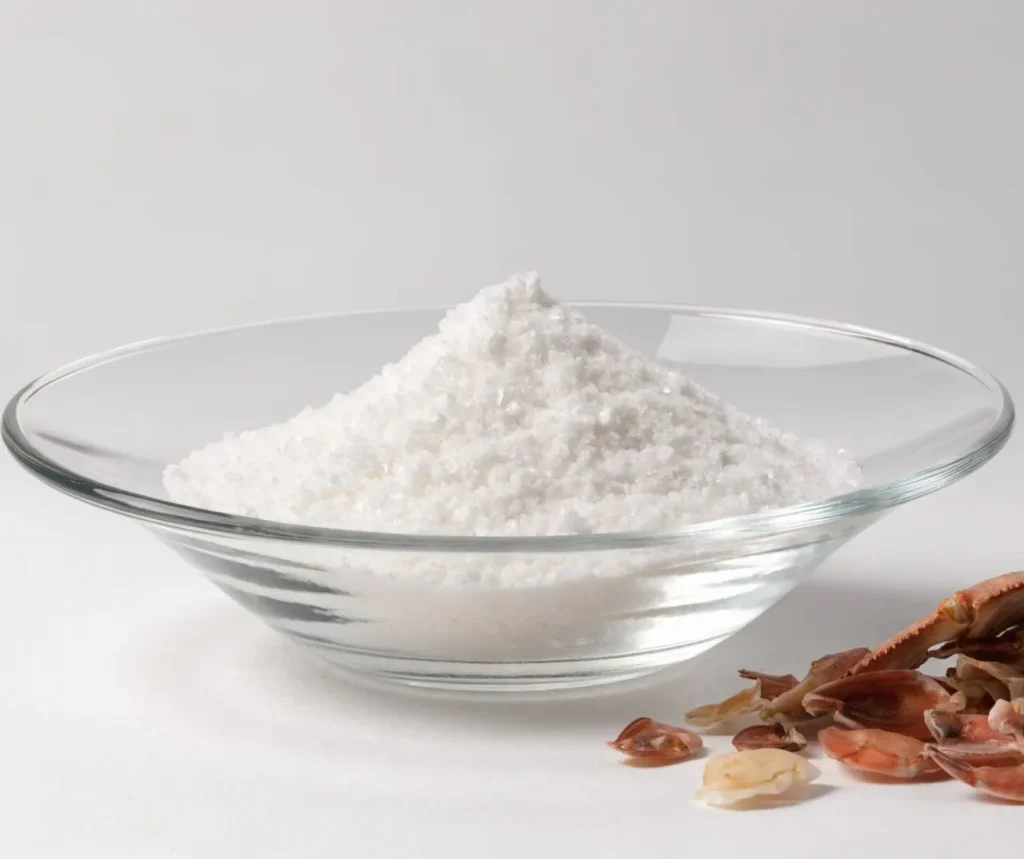
- Crustacean-Derived: Traditional chitin hydrolysis from shrimp/crab shells. Requires rigorous allergen control and deproteinization validation. Batch-to-batch variability tied to seasonal crustacean harvest.
- Fermentation-Derived (Vegan/Non-Shellfish): Glucose fermentation via engineered Aspergillus niger or E. coli strains, followed by amination and crystallization. Dominant for clean-label, allergen-free, and Halal/Kosher/Vegan claims. Provides superior batch-to-batch consistency and no tropomyosin risk.
- Consistency Control: Leading manufacturers control via in-process FTIR for deacetylation degree, controlled crystallization for particle size distribution, and gravimetric analysis for KCl/NaCl stoichiometry.
2. Dosage Form Manufacturing Matrix
| Dosage Form | Processing Temperature Tolerance | Optimal pH Range | Encapsulation/Coating Requirements | Flavor/Taste Masking & Texture Impact | Effect on Hardness/Disintegration/Flowability |
|---|---|---|---|---|---|
| Gummies | <85°C depositing temp. Both degrade >90°C. Sulfate more heat-sensitive in acidic pectin. | 3.2 – 4.0 for pectin set. HCl preferred, lower ionic strength interference. | Not applicable. Requires moisture-barrier wrapper. | Sulfate: higher bitterness, slight salty aftertaste from KCl. Requires masking system. Both create soft, gummy texture disruption at >400 mg/serving. | High dose reduces gel strength by 15-30%. Requires high-pectin or gelatin bloom adjustment. |
| Hard Gelatin / Vcaps (Size 0-00) | <40°C encapsulation. Excellent for both. | N/A | Vcaps recommended for moisture protection for sulfate. Band-sealing for HCl in high humidity plants. | HCl: mildly salty, slight acidic. Sulfate: more bitter, needs flavor in pullulan caps. | HCl: Excellent flow, Hausner ratio ~1.18. Sulfate: Poor flow, requires 0.5% colloidal SiO2. |
| Tablets – Direct Compression (DC) | Compression heat <50°C. Both stable. | N/A | Film coating (HPMC-based) mandatory for sulfate to prevent moisture ingress. | Not applicable. | HCl DC grade: High compactibility, tablet hardness 18-25 kp at 1500 mg load. Sulfate: Low compactibility, capping/lamination risk, hardness <12 kp without binder. |
| Tablets – Wet Granulation | Granulation drying 60-70°C. | Granulating solution pH 4.5-6.0 | Aqueous film coating acceptable. | Not applicable. | Both improve flow post-granulation. Sulfate requires low-water granulation (fluid bed <30% moisture) to avoid sticky mass. |
| RTM Powders | Dry blending only. | Final beverage pH 3.0-6.5. HCl stable across range. | No coating, but requires double PE liner + desiccant. | HCl dissolves clear, clean taste. Sulfate leaves salty/metallic note. Requires citric acid + natural flavor masking. | HCl: Good dispersibility. Sulfate: Clumps in high humidity, needs anti-caking (SiO2). |
| Liquid Supplements | Manufacturing <70°C, short hold time. | 3.5-5.0 with buffer. HCl preferred for clarity. | No encapsulation. Requires preservative system (potassium sorbate). | Both impart bitterness at >750 mg/dose. Sulfate precipitates with preservatives at low pH. | Not applicable. Sulfate shows higher sedimentation of KCl in cold storage. |
Plant-Floor Bottlenecks
- Moisture Absorption During Tableting: For Glucosamine Sulfate powder, the critical failure is moisture uptake on the press. RH must be controlled to <40% at 20-25°C. Without dehumidified feed frames, sulfate caking causes weight variation RSD >3%. HCl tolerates up to 50% RH.
- Maillard Reaction in Gummies: Glucosamine + reducing sugars (glucose syrup) + acid + heat at 80°C results in brown discoloration and loss of active >10% within 30 days at 30°C. Mitigation: Use non-reducing sugar alcohols (maltitol), deposit below 85°C, adjust pectin system to set at pH 3.8, and add glucosamine as cooled slurry post-cook.
- Gelation Issues: Sulfate 2KCl complex disrupts pectin cross-linking due to K+ competition with calcium. Results in soft or syneresis gummies. HCl is more compatible with pectin systems.
3. Procurement & Supply Chain Parameters
Commercial Terms
- Sample MOQ: 1 kg (fermentation-derived typically 1 kg at cost)
- Standard Drum: 25 kg net in fiber drum with double PE liners and aluminum foil barrier bag for Glucosamine Sulfate bulk moisture control
- Palletization: 20-24 drums/pallet, 500-600 kg
- Custom Granulation: DC grade MOQ typically 500 kg per mesh spec
For OEM/ODM premix development or custom mesh specifications, submit your target dosage form and request a TDS/COA review before committing to a 500 kg granulation run.
Lead Times & Supply Stability
- Standard Lead Time: 7-15 days for stock HCl, 15-25 days for sulfate and vegan grades
- Feedstock Risk: Crustacean chitin supply is seasonal (Q2-Q3 peak harvest) and subject to marine environmental policy. Fermentation media (corn glucose) stability is tied to commodity corn prices and energy costs, but provides year-round consistency.
- Regulatory/Environmental: China environmental inspections impact crustacean processing capacity. EU shellfish allergen labeling pressure is accelerating shift to fermentation.
B2B Technical Support
- Standard Documentation Package: COA, TDS, SDS/MSDS, Manufacturing Flowchart, Allergen Statement, Non-GMO, Residual Solvent, BSE/TSE Statement, Irradiation Statement
- OEM/ODM Capability: Custom premix with Chondroitin, MSM, Collagen Type II, Boswellia. Granular mesh customization (40-120 mesh). Taste-masked granules for RTM available from advanced Glucosamine Sulfate manufacturer facilities.
4. Quality Control, Compliance & Stability
Quality Control Testing Protocol
- Assay: HPLC with RI or ELSD detector per USP method, or potentiometric titration
- Impurities Profiling: Related substances via HPLC, free glucosamine <0.5%
- Heavy Metals: Pb, As, Cd, Hg via ICP-MS per USP <233>, total heavy metals <10 ppm
- Microbiological: TAMC <1000 CFU/g, TYMC <100 CFU/g, E. coli absent, Salmonella absent per USP <2023>
- Residual Solvents: Headspace GC per ICH Q3C
- Particle Size Distribution: Sieve analysis or laser diffraction per USP <786>
Global Regulatory Status
- US FDA: Old Dietary Ingredient (pre-DSHEA), NDI-exempt. Not GRAS for food, permitted as dietary supplement per 21 CFR 111.
- EU: Food supplement per Directive 2002/46/EC. Not Novel Food when crustacean-derived; fermentation-derived may require Novel Food consultation per EFSA.
- China: GB 20371-2015 Food Supplement raw material, listed in Health Food Raw Materials Directory
- Certifications: Halal, Kosher feasible for fermentation-derived. Vegan/Non-Animal only via fermentation. Non-GMO verification available. Shellfish allergen labeling required for crustacean-derived per FALCPA.
Shelf Life & Storage Protocol
- Shelf Life: 24 months from manufacture date in unopened original packaging; 36 months achievable for HCl DC grade with stability data
- Accelerated Stability: 40°C/75% RH 6 months, assay loss <2% for HCl, <3.5% for sulfate
- Real-Time: 25°C/60% RH 24 months
- Recommended Storage: 15-25°C, RH <60% (HCl) / RH <45% (sulfate), protect from light and moisture. Store in sealed aluminum barrier. Do not store with volatile acids or high-moisture materials.
5. B2B Market Insights & Sourcing Trends
- Cost Dynamics: Price drivers are not arbitrary. Primary drivers: (1) chitin/chitosan feedstock cost volatility, (2) fermentation glucose and ammonia costs, (3) energy cost for crystallization/drying, (4) salt complexing economics, KCl pricing vs NaCl. Sulfate 2KCl carries higher material cost than 2NaCl due to KCl commodity pricing and additional stoichiometric control step. HCl typically commands a lower cost-in-use per active base due to higher active load.
- Manufacturing Footprint: Global capacity remains concentrated in China (Zhejiang, Shandong) for crustacean-derived Glucosamine Sulfate and HCl. India emerging as secondary source. US and EU capacity shifting to fermentation-derived production for vegan compliance and supply chain de-risking. Expect dual-sourcing strategies: crustacean for cost-sensitive bulk, fermentation for premium allergen-free SKUs.
- Technological Trajectory: Industry evolution is clear: traditional acid hydrolysis of crustacean shells to bio-fermentation and enzymatic conversion. Enzymatic methods reduce solvent use and improve optical purity. Fermentation-derived product eliminates shellfish allergen, enabling broader label claims and compliance with EU allergen-free trends.
- Downstream Demand & Procurement Shift: Formulator trends include:
- Purity Preference: Shift toward HCl for high-potency 1500 mg single-tablet formats due to 83% active yield vs sulfate bulk density limitations.
- DC-Grade Demand: OEM/ODM tablet manufacturers increasingly require DC-grade Glucosamine HCl 20-40 mesh to eliminate wet granulation steps and reduce manufacturing cost.
- Clean-Label Requirements: Demand for vegan, non-shellfish, non-GMO, and solvent-free statements driving procurement to fermentation-derived sources.
- Supply Chain Transparency: B2B buyers require full traceability to feedstock (crustacean species or fermentation strain ID), allergen cross-contact validation, and carbon footprint data for ESG reporting.
For dosage form development where flowability, compactibility, and moisture stability dictate line efficiency, Glucosamine HCl is the pragmatic choice. Where legacy formulations or specific market registrations require sulfate, source Glucosamine Sulfate bulk as 2KCl or 2NaCl with explicit stoichiometry, barrier packaging, and fermentation-derived origin to mitigate allergen and stability risks. Request a quote, TDS/COA package, and 1 kg pilot testing sample to validate your selected grade against your tablet, capsule, gummy, RTM, or liquid platform.
To explore more related ingredients and in‑depth glucosamine research, visit our Joint & Bone Health Ingredients page and the Glucosamine Knowledge Hub.