

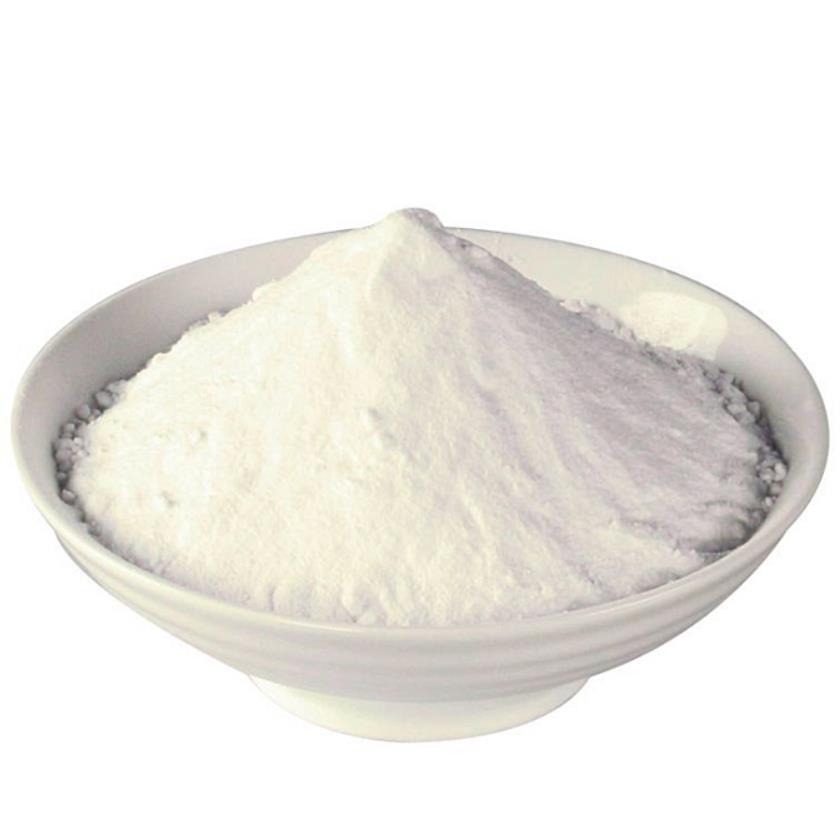
By Adrian Chen, Senior Technical Director, Advanced Nutrition Innovation Center | Technical review based on HPLC-UV assay at 260 nm and 340 nm, Karl Fischer titration, and ICP-MS heavy-metal screening.
Executive Summary: The Core Trade-Off
NADH vs NAD + bioavailability is determined less by the redox label than by gastric pH stability, enzymatic hydrolysis, and dose form, with NADH degrading rapidly below pH 5.0 and NAD+ undergoing hydrolysis by intestinal CD38 and brush-border enzymes. For most oral formats, NADH requires enteric protection and low-moisture processing below 25 degrees C and below 60 percent relative humidity, while NAD+ requires low-pH control between 4.0 and 6.0 and protection from alkaline hydrolysis. Brands should select on stability data at 40 degrees C and 75 percent relative humidity for 6 months, assay-adjusted cost per 10 mg dose, and a COA showing assay at or above 98.0 percent by HPLC, rather than on the ingredient name alone.
比較理化特性分析
Redox Chemistry and Molecular Identity
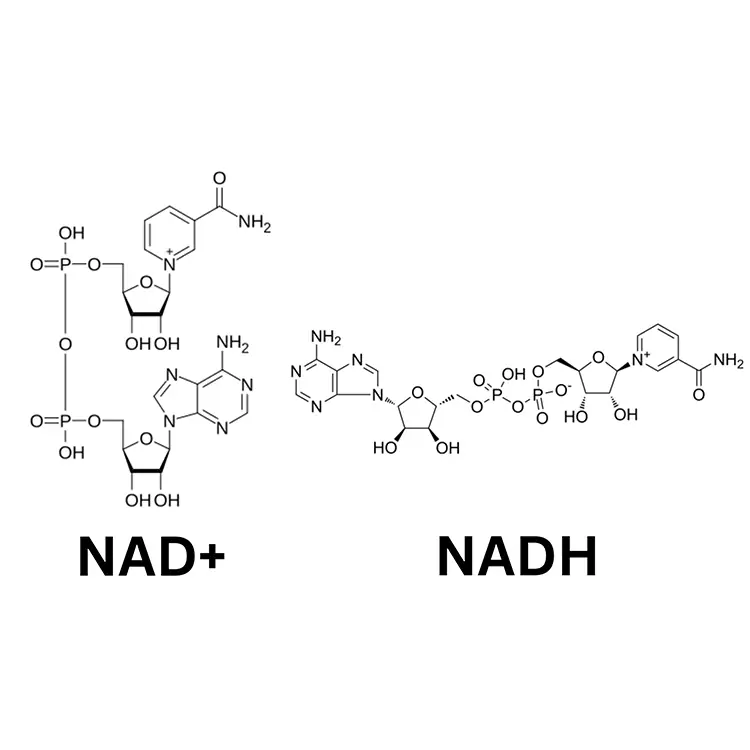
NADH, reduced beta-nicotinamide adenine dinucleotide, has the formula C21H29N7O14P2 and a molecular weight of 745.42 g per mol as the free acid, while NAD+ has the formula C21H27N7O14P2 and a molecular weight of 663.43 g per mol. The pair differs by two hydrogen atoms and two electrons, with a standard redox potential of minus 0.32 V for the NAD+ and NADH couple at pH 7.0 and 25 degrees C. Commercial NADH is most often supplied as the disodium salt, CAS 606-68-8, with a molecular weight of 789.38 g per mol, while NAD+ is most often supplied as the free acid, CAS 53-84-9, or as a chloride salt that must be declared separately on the COA.
In human cytosol, the NAD+ to NADH ratio is typically 200 to 1 to 700 to 1, while the mitochondrial ratio is near 7 to 1 to 10 to 1, as measured by LC-MS/MS on deproteinized extracts. This ratio explains why a direct oral dose does not translate into a proportional intracellular increase, because transport, compartmentalization, and enzymatic consumption control the pool. Formulators should therefore treat NADH and NAD+ as distinct raw materials with different handling limits, not as interchangeable forms of the same dose.
Solubility, pH Stability, and NADH Stability
Both molecules are freely soluble in water above 50 mg per mL at 25 degrees C, yet their pH stability profiles are opposite and decisive for format selection. NADH stability falls sharply below pH 5.0, with degradation accelerating in gastric fluid at pH 1.5 to 2.0, which is why an anti-aging & cellular energy raw material based on NADH requires enteric coating or acid-resistant encapsulation for oral delivery. NAD+ remains more stable between pH 4.0 and 6.0 and hydrolyzes above pH 8.0 into nicotinamide and adenosine diphosphate ribose, with the hydrolysis rate approximately doubling for every 10 degrees C increase in temperature.
Light and oxygen further differentiate the pair, because NADH undergoes photo-oxidation to NAD+ under UV exposure and must be stored in light-resistant, nitrogen-flushed packaging. NAD+ is less sensitive to oxidation but remains hygroscopic, with a loss on drying specification typically at or below 5.0 percent by Karl Fischer titration for both forms. For warehouse control, hold both powders at minus 20 degrees C for long-term storage or at 2 to 8 degrees C for short-term use, with relative humidity below 60 percent and unopened aluminum-foil bags with desiccant.
Bioavailability and First-Pass Degradation
Oral NAD+ shows low systemic bioavailability because its molecular weight of 663.43 g per mol exceeds the 500 Da threshold for passive diffusion and because CD38, NADase, and intestinal phosphatases hydrolyze it before absorption. Most intact NAD+ is therefore broken down to nicotinamide, nicotinamide mononucleotide, or nicotinamide riboside fragments that enter the salvage pathway, rather than reaching plasma as intact NAD+. Plasma measurements by LC-MS/MS typically detect nicotinamide metabolites within 30 to 60 minutes after dosing, not a sustained rise in intact NAD+ after a single oral dose.
NADH faces a different bottleneck, because gastric acid destroys unprotected NADH before it reaches the small intestine, where absorption is intended. Enteric-coated NADH tablets in published clinical work used 5 mg to 20 mg per day and reported measurable plasma NADH only when the coating resisted pH below 5.5 for at least 120 minutes in simulated gastric fluid. Sublingual and enteric-coated formats bypass part of this loss, but they still require dissolution testing at pH 6.8 phosphate buffer and assay verification by HPLC-UV at 340 nm for NADH and 260 nm for NAD+.
並排技術規格表
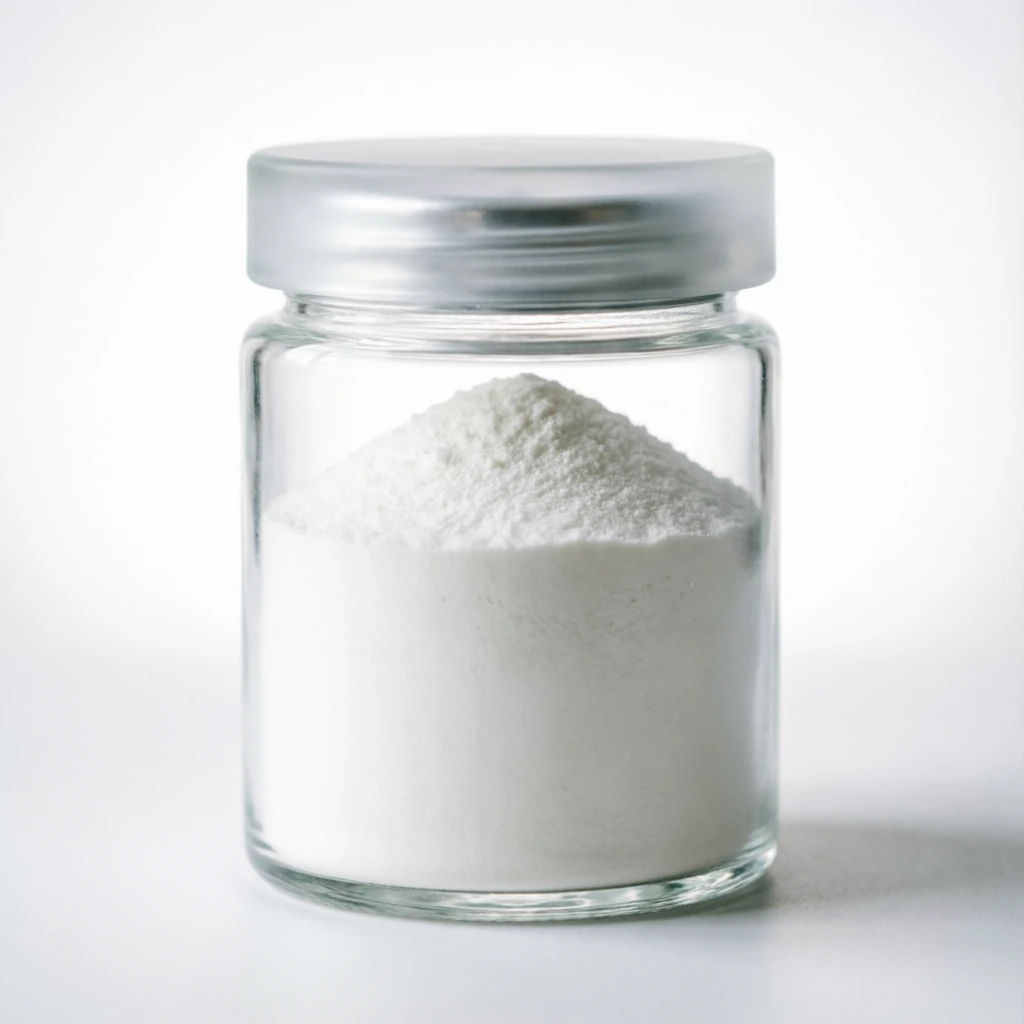
A NAD+ powder specification must be judged on the same analytical panel as NADH, with assay, water, heavy metals, and microbial limits reported from the same batch. The table below summarizes industry-standard limits used for qualification, and any COA that omits Karl Fischer water, ICP-MS metals, or HPLC chromatograms should be rejected for audit. Values are typical qualification thresholds, not a substitute for a supplier-specific COA and stability protocol under ICH Q1A.
| 參數 | NADH Disodium Salt | NAD+ Free Acid |
|---|---|---|
| CAS號碼 | 606-68-8 | 53-84-9 |
| 分子式 | C21H29N7O14P2 | C21H27N7O14P2 |
| 分子量 | 789.38 g per mol, disodium salt | 663.43 g per mol |
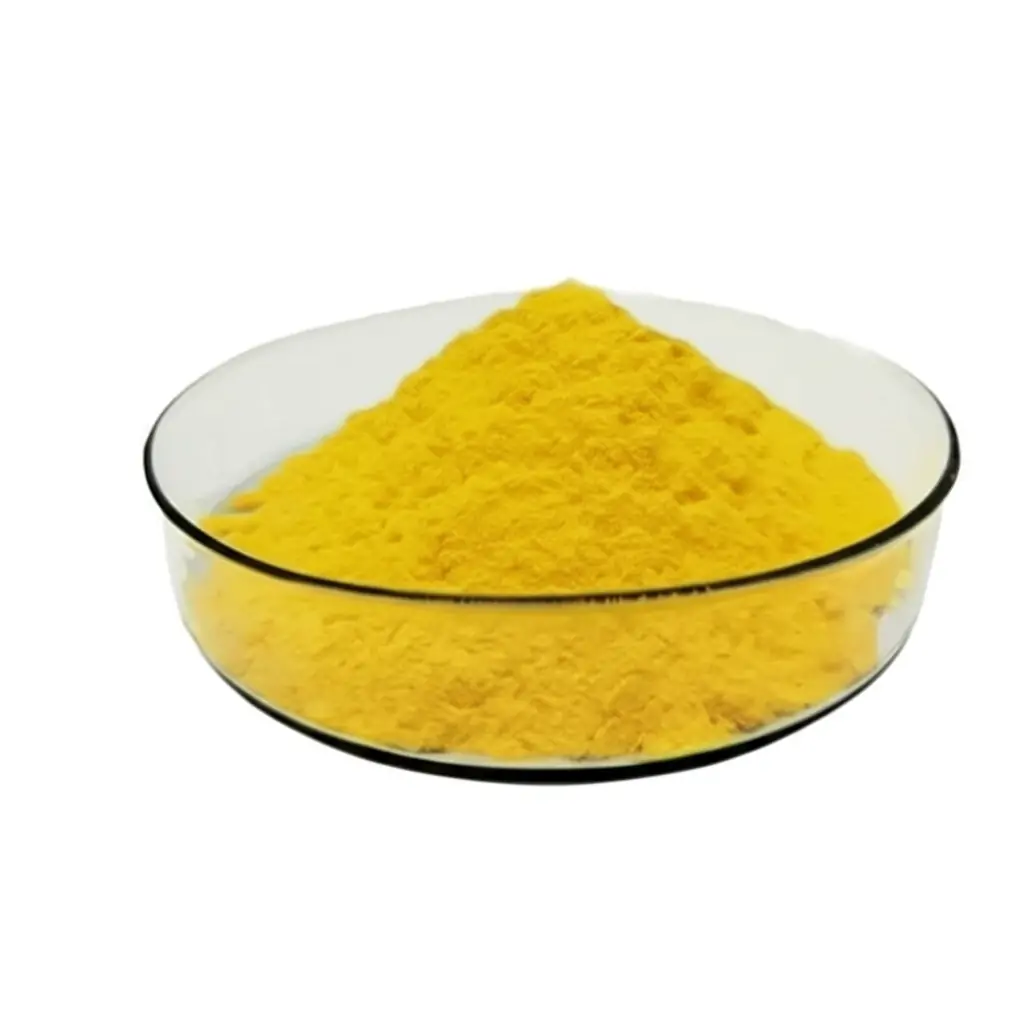
| 外觀 | 白色至淺黃色粉末 | 白色至類白色粉末 |
| Assay by HPLC-UV | At or above 98.0 percent, 340 nm | At or above 98.0 percent, 260 nm |
| 卡爾費雪的《水》 | At or below 5.0 percent | At or below 5.0 percent |
| Heavy Metals by ICP-MS | Total at or below 10 ppm, Lead at or below 1 ppm, Arsenic at or below 1 ppm, Cadmium at or below 1 ppm, Mercury at or below 0.1 ppm | Total at or below 10 ppm, Lead at or below 1 ppm, Arsenic at or below 1 ppm, Cadmium at or below 1 ppm, Mercury at or below 0.1 ppm |
| Residual Solvents by GC | Per ICH Q3C, for example ethanol at or below 5000 ppm | Per ICH Q3C, for example ethanol at or below 5000 ppm |
| 微生物限度 | TAMC at or below 1000 CFU per g, TYMC at or below 100 CFU per g, E. coli absent, Salmonella absent | TAMC at or below 1000 CFU per g, TYMC at or below 100 CFU per g, E. coli absent, Salmonella absent |
| pH of 1 Percent Solution | 7.0年到9.0年 | 3.0年到5.0年 |
| 儲存 | Minus 20 degrees C, nitrogen-flushed, light-resistant | 2 to 8 degrees C, dry, light-resistant |
The pH gap in the table is the most common source of formulation failure, because a blend buffered to pH 4.0 protects NAD+ but destroys NADH within hours at 25 degrees C. Buyers should require a 340 nm peak for NADH and a 260 nm peak for NAD+, plus a purity calculation that separates NAD+ from nicotinamide and ADP-ribose degradants. A batch with assay at 98.5 percent but water at 6.2 percent by Karl Fischer should be rejected, because excess moisture accelerates hydrolysis during 24-month shelf life.
應用特定推薦矩陣
Format selection should follow pH, moisture, and temperature exposure, not marketing preference, because each process step changes the effective dose. Tablets expose powders to compression force above 10 kN and to moisture below 3.0 percent, liquids expose them to pH and 25 degrees C storage for 12 months, and gummies expose them to 80 to 90 degrees C cooking and pH 3.5 to 4.5.
| 格式 | 推薦表格 | 關鍵約束 | 緩解方法 |
|---|---|---|---|
| 硬膠囊 | NADH or NAD+ | Moisture below 3.0 percent, relative humidity below 60 percent | Low-moisture fill, desiccant, nitrogen flush |
| Enteric Tablet | NADH preferred | Gastric pH 1.5 to 2.0 for 120 minutes | Enteric coating resisting pH below 5.5 for 120 minutes |
| Powder Stick or Sachet | NAD+ preferred for acid tolerance | Water activity above 0.60 during storage | Moisture-barrier sachet, water below 5.0 percent by Karl Fischer |
| Liquid or Shot | Neither ideal, NAD+ only if pH 4.0 to 6.0 | Hydrolysis at 25 degrees C over 12 months | Cold chain 2 to 8 degrees C, amber bottle, 6-month expiry |
| 粘性的 | Avoid direct NADH or NAD+ | Cooking 80 to 90 degrees C, pH 3.5 to 4.5, water activity above 0.65 | Microencapsulation or precursor strategy, validate assay loss below 10 percent |
Gummies present the highest risk, because cooking at 85 degrees C for 30 minutes and storage at water activity above 0.65 can cause assay loss above 15 percent in 3 months for unprotected NADH. If a gummy claim requires 10 mg NADH per piece, formulators must calculate assay-adjusted overage on the 98.0 percent assay basis and validate the final piece by HPLC-UV after 0, 3, and 6 months at 40 degrees C and 75 percent relative humidity. For tablets and capsules, direct compression with microcrystalline cellulose and silicon dioxide at below 40 percent relative humidity typically preserves assay within 95.0 to 105.0 percent of label claim at release.
Sourcing and Regulatory Compliance Evaluation
在對供應商進行資格審查時 功能性原料, require a full COA, a manufacturing flow chart, and three consecutive batch records showing assay variation within plus or minus 2.0 percent by HPLC. Audit criteria should include ISO9001 and ISO22000 certification, GMP cleanroom classification, and a stability program under ICH Q1A with accelerated data at 40 degrees C and 75 percent relative humidity for 6 months and long-term data at 25 degrees C and 60 percent relative humidity for 24 months. Suppliers should also disclose the synthesis route, whether by fermentation, enzymatic synthesis, or chemical synthesis, because residual solvent and impurity profiles differ by route and must be controlled to ICH Q3C limits.
In the US, NADH has been marketed as a dietary supplement under DSHEA with a history of use at 5 mg to 20 mg per day, while direct oral NAD+ lacks the same NDI history and is more often replaced by NMN or nicotinamide riboside precursors that have separate regulatory files. In the EU, neither isolated NADH nor NAD+ holds a general novel-food authorization under Regulation EU 2015/2283 for use as a food ingredient, so brands must confirm the status for the target member state and dosage before launch. In China, Japan, and other markets, importers must verify whether the ingredient is listed as a food raw material, a health-food ingredient, or a pharmaceutical intermediate, because classification changes labeling, dosage, and testing requirements.
Incoming QC should repeat HPLC-UV assay, Karl Fischer water, and ICP-MS metals on every lot, with microbial testing per USP Chapter 61 and Chapter 62 and residual solvents by GC per USP Chapter 467. Retain samples of at least 50 g per lot at minus 20 degrees C for the full shelf life plus 12 months, and trend assay, water, and degradant peaks across at least 10 lots to detect supplier drift. Reject any lot with total related substances above 2.0 percent, nicotinamide above 1.0 percent, or an unidentified peak above 0.10 percent by HPLC area normalization.
常見問題
1. Which is more stable in a finished product, NADH or NAD+?
NAD+ is more stable between pH 4.0 and 6.0 at 25 degrees C, while NADH is more stable between pH 8.0 and 10.0 and degrades below pH 5.0. Stability must be confirmed by 6-month accelerated testing at 40 degrees C and 75 percent relative humidity for the exact formula.
2. Can NADH and NAD+ be used interchangeably at the same milligram dose?
No, because their molecular weights differ by 82 g per mol for the free acids and their degradation pathways differ, so a 10 mg dose is not molar-equivalent. Dose conversion must use assay-adjusted molar calculation and stability data for the chosen form.
3. What test methods should a COA include for NADH vs NAD+?
A complete COA must include HPLC-UV assay at 340 nm for NADH and 260 nm for NAD+, Karl Fischer water at or below 5.0 percent, ICP-MS heavy metals at or below 10 ppm, and microbial limits per USP 61 and 62. A COA without chromatograms or water data is incomplete for qualification.
4. Why do many brands use NMN or NR instead of direct NAD+?
Direct oral NAD+ is hydrolyzed by CD38 and intestinal enzymes and has low permeability above 500 Da, while NMN at 334.22 g per mol and NR at 255.25 g per mol enter the salvage pathway more efficiently. Brands select precursors when the goal is sustained NAD+ pool support rather than delivery of intact NAD+.
5. What storage condition preserves NADH powder longest?
Long-term storage at minus 20 degrees C in nitrogen-flushed, light-resistant aluminum-foil bags with desiccant and relative humidity below 60 percent preserves assay above 98.0 percent for 24 months. Storage at 25 degrees C without nitrogen accelerates oxidation to NAD+ and increases degradants above 2.0 percent.
關於發布者:本技術簡報由總部位於中國深圳的全球功能性原料製造商和生物製造供應商高信生物發布。高信生物擁有符合GMP認證的100,000萬級生產設施,日產能達16噸,專注於高純度輔酶、人類乳寡糖(HMO)、葡萄糖胺衍生物及功能性甜味劑。我們的研發團隊由來自冷泉港實驗室和埃默里大學的博士後科學家領銜,每年根據ISO9001、ISO22000、GMP、NSF、SGS、清真和猶太潔食認證,開發2,000多種定製配方。