

Published by GOTHINK Biotech | Category: Supplement Raw Materials, Sweetener Ingredients | Reading time: ~10 min
Executive Summary
For manufacturers, formulators, and procurement teams sourcing supplement raw materials, the choice between Rebaudioside A (Reb A) and Rebaudioside M (Reb M) carries meaningful consequences for product quality, consumer acceptance, regulatory compliance, and total ingredient cost. Both are zero-calorie steviol glycosides derived from Stevia rebaudiana Bertoni, yet they differ substantially in molecular structure, sensory profile, production method, solubility, and market price.
This guide is written for B2B buyers — not end consumers — and is intended to provide a practical, evidence-based framework for evaluating Rebaudioside M powder and Rebaudioside A as bulk sweetener ingredients. We cover chemical characterization, taste performance, formulation compatibility, regulatory status, sourcing considerations, and quality specifications that a responsible Rebaudioside M manufacturer or Rebaudioside M wholesale supplier should be able to provide.
Key takeaway: Reb A remains the cost-efficient standard for most applications; Reb M delivers superior taste and solubility that justify its price premium in premium-positioned, consumer-facing finished goods. Blending both is frequently the most practical commercial solution.
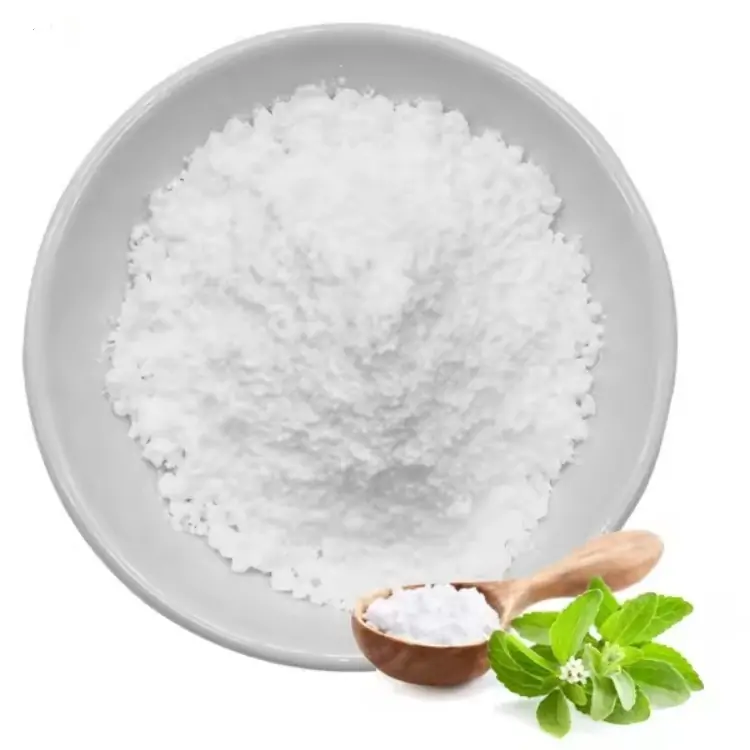
1. Understanding the Steviol Glycoside Family
Steviol glycosides are the sweet-tasting compounds found in the leaves of Stevia rebaudiana. They share a common steviol backbone (an ent-kaurene diterpene aglycone) but differ in the number, type, and position of sugar moieties attached to the backbone. These structural differences drive the dramatic variation in taste quality, sweetness intensity, and aqueous solubility observed across the family.
Currently, the commercially relevant steviol glycosides include Stevioside, Rebaudioside A, Rebaudioside B, Rebaudioside C, Rebaudioside D, Rebaudioside M, and several others. Among these, Reb A has historically dominated global supply because it constitutes roughly 5% of the dry weight of stevia leaves and can be extracted and purified using well-established downstream processing. Rebaudioside M, by contrast, is present at less than 0.1% of leaf dry weight, making direct plant extraction economically impractical at commercial scale.
Reference: Okonkwo et al. (2024), Journal of Food Science, 89(11): 6946–6965.
2. Molecular Structure and Its Commercial Implications
Understanding the structural difference between Reb A and Reb M helps buyers predict how each ingredient will perform in their specific formulation matrix.
Rebaudioside A (Reb A)
- Steviol backbone with four glucose units (one at C-13, three at C-19)
- Molecular formula: C₄₄H₇₀O₂₃; molecular weight: 967.01 g/mol
- Sweetness potency: approximately 200–300× sucrose
- Water solubility: moderately soluble; improves with temperature
- Aftertaste: mild licorice or bitter finish at concentrations above threshold
Rebaudioside M (Reb M)
- Steviol backbone with five glucose units — one additional moiety at C-19 relative to Reb A
- Molecular formula: C₅₆H₉₀O₂₉; molecular weight: 1291.28 g/mol
- Sweetness potency: approximately 200–400× sucrose depending on matrix
- Water solubility: approximately 0.1 g/100 mL at 25°C; outperforms Reb A in high-solids clear beverage matrices
- Aftertaste: markedly cleaner; described as round, sucrose-like, with minimal lingering notes
The extra glucose unit in Reb M is not merely cosmetic. It directly alters how the molecule interacts with sweet taste receptors (TAS1R2/TAS1R3) and how quickly sweetness onset occurs on the palate. Sensory research has consistently shown that Reb M produces a faster-onset, cleaner sweetness curve that more closely mirrors sucrose than any other common steviol glycoside.
| Property | Rebaudioside A | Rebaudioside M |
|---|---|---|
| Leaf abundance | ~5% dry weight | <0.1% dry weight |
| Sweetness vs. sucrose | 200–300× | 200–400× |
| Taste profile | Moderate bitter/licorice aftertaste | Clean, sugar-like, minimal aftertaste |
| Water solubility (25°C) | Moderate | ~0.1 g/100 mL; better in high-solids |
| pH stability range | 2.5–7.0 | 2.5–7.0 |
| Thermal stability | >98% retained post-pasteurization | >98% retained post-pasteurization |
| Production method | Leaf extraction + purification | Primarily enzymatic / fermentation |
| Regulatory status (US) | FDA GRAS | FDA GRAS |
| Relative cost | Lower | Higher (premium) |
3. Production Methods: Why Source Matters for Rebaudioside M Bulk Supply
Because Reb M is naturally scarce in stevia leaves, two main production routes have been developed to enable commercial-scale Rebaudioside M bulk supply:
3.1 Enzymatic Bioconversion
In this approach, Reb A or Reb E — both more abundant steviol glycosides — serve as starting substrates. Specific glycosyltransferase enzymes catalyze the controlled addition of glucose units to yield Reb M with high regiochemical precision. This method is well-suited to manufacturers who already operate upstream steviol glycoside processing infrastructure and want to leverage existing raw material streams.
3.2 Microbial Fermentation
Engineered yeast strains (notably Yarrowia lipolytica and Saccharomyces cerevisiae) have been developed to biosynthesize Reb M de novo from carbohydrate feedstocks — commonly glucose derived from rice or corn. This route does not require stevia leaf as a starting material, enabling year-round production independence and consistent batch-to-batch purity. Fermentation-derived Reb M has gained traction with brands seeking a “stevia-free” label while retaining the same molecule and sensory profile.
For buyers sourcing Rebaudioside M raw material in volume, understanding which production route a given Rebaudioside M manufacturer employs is important for three reasons: it affects trace-contaminant profiles, it determines whether the product can be labeled as “stevia extract” versus “fermentation-derived,” and it influences supply chain resilience under agricultural commodity pressures.
Reference: Okonkwo et al. (2024), J. Food Sci., 89(11): 6946–6965; Compound Solutions technical brief (2025).
4. Sensory Performance: Application-Level Guidance
Taste performance is typically the primary driver when evaluating Rebaudioside M powder versus Reb A powder for a formulation. The following application-specific guidance is based on reported industry experience and published sensory panel data.
4.1 Functional Beverages and RTDs
At typical use levels (0.01–0.03% w/v), Reb A delivers sufficient sweetness but can amplify off-notes from botanical extracts, acids, or protein hydrolysates present in functional drink formulations. Reb M’s cleaner mid-palate and softer finish reduce this interaction, making it the preferred choice for premium RTDs, flavored waters, and adaptogen drinks where ingredient purity perception matters.
4.2 Protein Powders and Sports Nutrition
Whey and plant-based protein hydrolysates carry inherent bitter and astringent notes. Reb A at the concentrations needed to achieve target sweetness can compound bitterness. Rebaudioside M raw material used in protein supplements typically requires a lower inclusion rate due to higher potency, and its masking effect on off-notes has been well documented in formulator feedback.
4.3 Gummies, Chewables, and Confections
In high-sugar-replacement matrices such as gummies or chewable tablets, Reb A’s characteristic finish becomes perceptible to a broader consumer panel, particularly in citrus-flavored products where licorice notes clash with the flavor system. Reb M provides a rounder, more balanced sweetness that blends more predictably with organic acids and fruit flavors.
4.4 Dietary Supplements (Capsules, Powders, Effervescents)
In effervescent tablet formulations, Reb M powder demonstrates faster dissolution compared to Reb A under standard carbonation conditions, reducing the risk of crystallization-related texture defects. For capsule and dry powder supplements where sweetness is secondary to other actives, Reb A often remains the cost-justified choice.
4.5 Blended Sweetener Systems
A pragmatic and commercially common approach is to blend Reb A and Reb M in ratios calibrated to the target matrix and budget. Reb A provides cost-effective bulk sweetness; Reb M modifies the taste curve and attenuates off-notes at low addition levels (often 10–30% of total steviol glycoside content). Blending also allows formulators to position products as “stevia extract” while benefiting from Reb M’s sensory properties without incurring the full cost of a 100% Reb M formula.
5. Regulatory Status and Global Compliance
Both Rebaudioside A and Rebaudioside M carry FDA GRAS (Generally Recognized As Safe) status in the United States. Their acceptable daily intake (ADI) is set at 4 mg/kg body weight per day as steviol equivalents by JECFA (WHO/FAO Joint Expert Committee on Food Additives) and EFSA (European Food Safety Authority).
Within the European Union, both Reb A and Reb M are approved as food additives under Regulation (EU) No 1333/2008, listed as E 960. China’s GB 2760 standard permits steviol glycosides in a defined range of food categories; formulators targeting the Chinese market should verify category-specific maximum use levels directly from the current GB standard or with a qualified regulatory consultant.
For supplement raw materials exporters and importers, it is also important to note that Reb M sourced via fermentation may carry different labeling requirements in certain jurisdictions compared to leaf-extracted Reb M. Buyers are advised to request a declaration of production method from their Rebaudioside M manufacturer and verify that the declared method aligns with the regulatory framework of their target market.
Reference: JECFA (2010); EFSA Panel on Food Additives (2015); FDA GRAS Notices GRN 000301 and GRN 000706.
6. Quality Specifications: What to Require When Sourcing Rebaudioside M Wholesale
Whether sourcing Rebaudioside M bulk for initial trials or in full commercial volumes, buyers should establish a minimum specification checklist before approving a supplier. The following parameters represent industry-standard requirements for food-grade and supplement-grade steviol glycosides:
| Specification Parameter | Minimum Acceptable Standard | Notes |
|---|---|---|
| HPLC Purity (Reb M) | ≥95% | Request certificate of analysis per lot |
| Residual solvents | Within ICH Q3C limits | Ethanol, ethyl acetate most common |
| Heavy metals (total) | ≤10 ppm (Pb, Cd, Hg, As) | Per USP <232> or equivalent |
| Microbial limits | Total plate count ≤1000 CFU/g | Yeast & mold ≤100 CFU/g |
| Moisture content | ≤6% | Affects shelf-life and flowability |
| Particle size (D90) | Per application spec | Finer for beverages; coarser for tablets |
| Allergen declaration | Required | Especially for fermentation-derived Reb M |
| GMO status | Declared by producer | Relevant for EU and Non-GMO Project markets |
| Third-party testing | Required | ISO 17025-accredited lab preferred |
In addition to the above, buyers sourcing Rebaudioside M wholesale should request documentation of the manufacturer’s quality management system certifications (ISO 9001, ISO 22000, GMP), as well as food safety certifications such as Halal and Kosher if required by the target distribution channel.
7. Stability Data: What the Science Shows
A common concern among formulators is whether Rebaudioside M is as stable as the better-characterized Reb A across the processing conditions typical of supplement manufacturing.
Published stability studies (Prakash et al., 2014; Okonkwo et al., 2024) indicate that Reb M demonstrates comparable stability to Reb A across the following conditions:
- pH range 2.5–7.0 (aqueous systems at ambient temperature)
- High-temperature short-time (HTST) pasteurization: >98% potency retained
- Extrusion and dry blend processing: no significant degradation reported
- Storage at 25°C / 60% RH in sealed dry form: stable over 24-month observation periods
One notable finding is that Rebaudioside M shows marginally better stability in highly acidic environments (pH below 4.0) over extended storage compared to Reb A. This makes Rebaudioside M powder particularly well-suited for carbonated soft drinks, acidic RTDs, and effervescent supplement formats.
Reference: Prakash et al. (2014), Foods, 3(1): 162–175; Okonkwo et al. (2024), J. Food Sci., 89(11): 6946–6965.
8. Cost Analysis: Making the Business Case for Rebaudioside M
Price is the most common reason buyers default to Reb A. Rebaudioside M commands a significant per-kilogram premium over Reb A, primarily because of its low natural abundance in stevia leaves and the additional processing steps required for enzymatic conversion or fermentation. However, a raw cost comparison can be misleading for several reasons:
- Higher potency means lower inclusion rates: Because Reb M can achieve target sweetness at lower concentrations, the quantity of Rebaudioside M raw material required per finished unit is reduced. In some high-sweetness applications, this partially or fully offsets the per-kilogram price differential.
- Reduced masking agent requirements: In formulations where Reb A requires additional flavor masking or bitter-blocking compounds to achieve consumer acceptance, switching to Reb M can eliminate or reduce those auxiliary ingredient costs.
- Lower reformulation risk: Products launched with Reb M tend to require fewer sensory reformulations, reducing development cycle time and associated R&D costs.
- Premium positioning: For brands where ingredient quality is a differentiator, the use of Rebaudioside M enables a premium label claim (“next-generation stevia,” “ultra-clean sweetness”) that may support a higher consumer price point.
The net economic case for Reb M is strongest in: (a) premium consumer products in competitive taste-parity markets; (b) formulations with inherent off-note challenges (protein, botanical, caffeine); and (c) applications targeting sophisticated consumers who are sensitive to aftertaste.
9. Practical Sourcing Checklist for Rebaudioside M Bulk Orders
Before finalizing a Rebaudioside M wholesale purchase agreement, buyers should complete the following due diligence steps:
- Request lot-specific Certificate of Analysis (CoA) with HPLC chromatogram, not just a generic spec sheet.
- Confirm production method (leaf extraction, enzymatic conversion, or fermentation) and verify compliance with target market labeling rules.
- Request third-party heavy metal and microbiological test reports from an ISO 17025-accredited laboratory.
- Verify manufacturer certifications: at minimum, ISO 9001, ISO 22000, and GMP. Halal/Kosher if distribution requires.
- Request sample quantities (typically 100g–1kg) for in-house formulation trials before committing to full Rebaudioside M bulk orders.
- Clarify lead times, minimum order quantities (MOQ), and available packaging formats (25kg drums, smaller foil bags, etc.).
- Confirm allergen, GMO status, and suitability for target certifications (Non-GMO, organic-compatible, vegan).
10. Summary and Recommendations
Rebaudioside A and Rebaudioside M are not interchangeable ingredients — they are complementary tools in a formulator’s sweetener toolkit. The decision between them should be driven by application requirements, target consumer expectations, label strategy, and total formulation economics rather than per-kilogram price alone.
Reb A remains the rational default for cost-sensitive applications, established supply chains, and formulations where taste quality at low usage levels does not create perceivable issues. Rebaudioside M powder is the superior choice for taste-critical applications, protein-based formulations, premium beverages, and products that compete in markets where consumer palate sophistication is high.
For most commercial applications, a strategic blend of the two — with Reb M contributing 15–30% of total sweetener — offers a practical balance of cost efficiency and sensory quality. Formulators are encouraged to run side-by-side sensory panels across their specific matrix before locking in a sourcing decision.
As global demand for clean-label, zero-calorie supplement raw materials continues to grow, supply chain reliability, certified quality documentation, and responsive technical support from a Rebaudioside M manufacturer are as important as the specification itself.
Frequently Asked Questions (FAQ)
Q1: What is the main difference between Rebaudioside M and Rebaudioside A for supplement formulations?
The most practically significant difference is taste quality. Reb A can produce a mild bitter or licorice-like aftertaste at moderate-to-high use levels, while Rebaudioside M powder delivers a noticeably cleaner, more sucrose-like sweetness with minimal lingering notes. For supplement raw materials applications where taste is a primary performance criterion, Reb M consistently outperforms Reb A in sensory panels.
Q2: Is Rebaudioside M safe and what is its approved daily intake?
Yes. Rebaudioside M is approved by the U.S. FDA as GRAS (Generally Recognized As Safe) and is permitted under EU Regulation (EU) No 1333/2008 (E 960). The Joint FAO/WHO Expert Committee on Food Additives (JECFA) has established an acceptable daily intake (ADI) of 4 mg/kg body weight per day, expressed as steviol equivalents — the same ADI that applies to all approved steviol glycosides.
Q3: Why is Rebaudioside M more expensive than Reb A?
Reb M occurs at less than 0.1% of stevia leaf dry weight versus approximately 5% for Reb A. Direct leaf extraction is therefore not commercially feasible for most volumes, requiring either enzymatic bioconversion from more abundant steviol glycosides or microbial fermentation, both of which entail higher processing costs. That said, Reb M’s higher sweetness potency means lower usage rates in finished goods, which partially offset its higher raw material price in many applications.
Q4: Can Rebaudioside M and Rebaudioside A be blended in the same formula?
Yes, and this is a common commercial strategy. Blending allows formulators to use Reb A as the primary sweetness contributor for cost efficiency while incorporating a smaller proportion of Rebaudioside M raw material to improve the overall taste curve, mask off-notes, and achieve a cleaner finish. Typical blend ratios range from 70:30 to 85:15 (Reb A:Reb M) depending on the application matrix and target sensory profile.
Q5: What quality certifications should I expect from a reputable Rebaudioside M manufacturer?
At minimum, a credible Rebaudioside M manufacturer should hold ISO 9001 (quality management), ISO 22000 (food safety management), and GMP certification. Third-party testing reports from ISO 17025-accredited laboratories should be available on request for each production lot, covering HPLC purity, heavy metals (per USP <232> or equivalent), microbial limits, residual solvents, and moisture. Additional certifications such as Halal, Kosher, Non-GMO, and NSF may be relevant depending on your distribution channel.
Q6: How should Rebaudioside M powder be stored to maintain stability?
Rebaudioside M powder should be stored in sealed, moisture-proof packaging away from direct light and heat. Standard conditions of 25°C or below and relative humidity ≤60% are appropriate for most bulk packaging formats. Under these conditions, the product maintains full potency for a typical shelf life of 24 months from the date of manufacture. Once opened, minimize exposure to ambient humidity, as steviol glycosides are hygroscopic.
Q7: Is fermentation-derived Rebaudioside M the same molecule as leaf-extracted Reb M?
Chemically, yes. Fermentation-derived Rebaudioside M and leaf-extracted Reb M are the same molecule with identical molecular structure and functional properties. The difference lies in the production method and, consequently, in labeling. In most markets, fermentation-derived Reb M cannot be labeled as “stevia extract” but may be declared as “Rebaudioside M” or “steviol glycosides (fermentation).” Buyers should verify the labeling requirements for their target market with their regulatory affairs team.
About GOTHINK Biotech
GOTHINK Biotech is a professional manufacturer and global supplier of functional raw materials headquartered in China. The company serves nutraceutical, dietary supplement, and pharmaceutical formulation manufacturers worldwide, providing certified bulk ingredients with full traceability and third-party quality documentation.
GOTHINK Biotech’s product portfolio spans multiple ingredient categories relevant to modern supplement formulation:
- Coenzymes: NMN, NMNH, NAD+, NADH, NADP, NRHM, Coenzyme Q10, Folic Acid
- Human Milk Oligosaccharides (HMOs): 2′-Fucosyllactose (2′-FL), 3-Fucosyllactose (3-FL), Lacto-N-tetraose (LNT), Lacto-N-neotetraose (LNnT)
- Glucosamine Series: Glucosamine (GlcN), Glucosamine Hydrochloride, Glucosamine Sulfate, N-Acetyl-Glucosamine
- Saccharide Derivatives: Sialic Acid (N-Acetylneuraminic Acid), Rebaudioside D (Reb D), Rebaudioside M (Reb M), Ginsenosides Rh2/Rg3
All GOTHINK Biotech facilities and products meet globally recognized quality standards, with certifications including ISO 9001, ISO 22000, GMP, SGS, NSF, CQC, Halal, and Kosher. The company maintains rigorous food safety management systems and provides complete third-party testing documentation for every batch.
With over 2,000 customized formulations developed annually and a scientific team trained at leading research institutions in the US and UK, GOTHINK Biotech offers OEM/ODM manufacturing services alongside standard bulk ingredient supply, with reliable global logistics and short lead times.
For bulk inquiries, technical data sheets, sample requests, or Rebaudioside M wholesale pricing, contact GOTHINK Biotech directly through the official website.
Disclaimer: This article is intended for business-to-business informational purposes. It does not constitute regulatory, legal, or clinical advice. Buyers should conduct their own due diligence and consult qualified professionals regarding ingredient selection, regulatory compliance, and formulation decisions.