
Abstract
Global regulatory pressure on added sugars, combined with accelerating consumer demand for low-sugar and sugar-free products, has fundamentally reshaped ingredient sourcing across the nutraceutical, food, and beverage industries. Stevia-derived sweeteners — particularly next-generation glycosides such as Rebaudioside M (Reb M) and Rebaudioside D (Reb D) — have moved from niche botanical extracts to mainstream raw material staples. This article examines the regulatory and market forces driving that shift, explains the technical distinctions between stevia ingredients, and offers practical guidance for brands and formulators evaluating stevia raw material suppliers. Whether you are scaling an existing product line or launching a new sugar-free formulation, understanding the stevia supply chain will directly affect your product quality, cost structure, and compliance posture.
Why Sugar Is Under Global Regulatory Pressure
The case against excessive sugar consumption has built steadily over two decades of epidemiological research, and governments worldwide have responded with increasingly firm policy action.
The United Kingdom introduced a tiered Soft Drinks Industry Levy in 2018, directly taxing beverages above defined sugar thresholds. Mexico, Chile, South Africa, and the Philippines have implemented similar sugar or sweetened-beverage taxes. The European Union continues to update its nutritional labeling frameworks to make added sugar content more conspicuous on packaging. In the United States, the FDA revised its Nutrition Facts label rules to require a dedicated “Added Sugars” line, and several states have advanced proposals for sugar-beverage taxes of their own.
For product manufacturers, the implications are concrete. Formulations built around conventional sucrose face either reformulation costs or tax exposure depending on jurisdiction. Brands that anticipated this trend and built sugar-free or reduced-sugar lines early now hold a structural advantage in both compliance cost and consumer perception.
The dietary supplement segment has been particularly responsive. Consumers actively seeking wellness products are among the most label-literate shoppers in any channel, and the demand for clean-label, low-glycemic formulations has driven formulators to natural, non-caloric sweeteners as a default ingredient choice rather than a secondary option.
The Natural Sweetener Response: From Stevia Plant to Stevia Powder
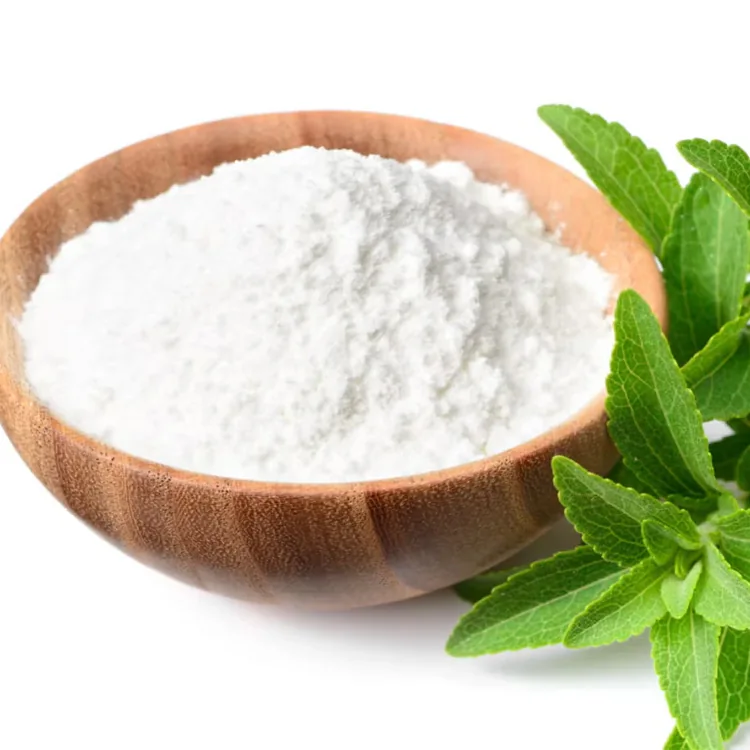
Stevia rebaudiana is a plant native to South America whose leaves contain a family of diterpene glycosides responsible for its intense sweetness. Stevia has been used as a sweetener in Paraguay and Brazil for centuries, but its commercial expansion into global ingredient markets began in earnest following GRAS (Generally Recognized as Safe) authorization by the FDA in 2008 and subsequent approvals by the European Food Safety Authority (EFSA) and Codex Alimentarius.
The sweetness in stevia leaves comes not from a single compound but from a collection of steviol glycosides, each with a distinct sensory profile, solubility characteristic, and relative sweetness intensity. The most commercially significant include:
Rebaudioside A (Reb A): The most abundant glycoside in the stevia leaf, widely available, and the backbone of first-generation stevia powder products. It delivers high sweetness but carries a characteristic bitter or licorice aftertaste at higher concentrations, which has historically limited its use in sensitive applications.
Rebaudioside D (Reb D): Present in much smaller quantities in the stevia leaf, Reb D offers a cleaner and more sugar-like taste than Reb A. Because of its low natural abundance, commercial supply traditionally required either complex purification processes or bioconversion methods.
Rebaudioside M (Reb M): Also naturally occurring at trace levels, Reb M is widely considered the most sugar-like of all the steviol glycosides. It has the smoothest onset, the least aftertaste, and the closest mouthfeel match to sucrose — qualities that make it highly desirable for premium formulations. Commercial production of Reb M powder at scale is typically achieved through biosynthesis or enzymatic bioconversion, which has dramatically improved availability.
For B2B buyers, understanding these distinctions matters because the right glycoside selection will depend on application type, target consumer profile, regulatory jurisdiction, and price point tolerance.
Reb M Powder: Why It Has Become the Benchmark Ingredient
Among all stevia-derived ingredients, Reb M powder has attracted the most product development interest over the past several years, and for well-documented reasons.
Taste quality at functional use levels. Most alternative sweeteners, including earlier stevia extracts, exhibit off-notes — bitterness, metallic notes, or cooling sensations — that require masking agents or flavor systems to counteract. Reb M’s sensory profile is significantly cleaner, which simplifies formulation and reduces the need for additional flavor correction costs.
Regulatory standing. Reb M has received approval from major regulatory bodies including the FDA (GRAS) and EFSA, and is included in Codex Alimentarius standards for steviol glycosides. This broad acceptance reduces compliance risk for brands operating across multiple geographies.
Stability in diverse applications. Reb M powder demonstrates good stability across a range of pH conditions and processing temperatures, making it suitable not only for dietary supplements and functional beverages but also for baked goods, dairy analogues, and oral care products.
Consumer label appeal. As brands seek to replace “steviol glycosides” with more specific ingredient declarations, listing “Rebaudioside M” or “Reb M” on a label communicates transparency and ingredient sophistication to label-conscious buyers.
Scalable production. The development of efficient biosynthetic production routes has resolved the historical bottleneck of extracting Reb M directly from the stevia leaf, where it exists only in trace concentrations. This has enabled consistent, large-scale supply of high-purity Reb M powder — a prerequisite for any serious commercial program.
For brands formulating sugar-free protein powders, functional gummies, nootropic beverages, children’s supplements, or any product where sweetness quality is a differentiator, Reb M powder is typically the first ingredient evaluated.
Evaluating Stevia Raw Material Quality: What Buyers Should Check
Not all stevia raw material is equivalent. The supply chain ranges from highly controlled, GMP-certified manufacturers producing pharmacopoeial-grade glycosides to commodity processors with inconsistent purity profiles. Before committing to a stevia supplier, procurement teams should evaluate the following parameters.
Purity and specification. Stevia bulk and stevia powder products vary widely in steviol glycoside content. A product labeled “90% steviol glycosides” may contain a mixture of multiple glycosides, with Reb A dominant. If your formulation specifies Reb M or Reb D, verify that the certificate of analysis reports the individual glycoside content, not only total glycosides. Minimum purity thresholds for premium Reb M powder typically start at 95% and may reach 98% or higher for pharmaceutical-grade applications.
Third-party testing documentation. Reputable stevia manufacturers provide third-party testing reports covering heavy metals, microbial contamination, pesticide residues, and solvents used in extraction or purification. Request these for every batch, not only as one-time qualification documents.
Regulatory certifications. For products destined for global markets, confirm that the manufacturer holds relevant certifications: GMP (Good Manufacturing Practice), ISO 9001, ISO 22000, and Halal or Kosher certification depending on target markets. NSF or similar third-party quality system audits add an additional layer of assurance.
Traceability. Understand whether the manufacturer can trace material from finished ingredient back to cultivation source. With increasing scrutiny on supply chain transparency, especially in the EU under emerging due diligence regulations, traceability documentation will become a competitive asset.
Production method disclosure. For Reb M and Reb D specifically, clarify whether the material is produced by direct leaf extraction, fermentation, enzymatic conversion, or chemical synthesis. Each method affects purity profile, regulatory classification in certain jurisdictions, and consumer label positioning. Biosynthetically produced Reb M, for example, has specific labeling requirements in some markets.
Stevia Wholesale and Bulk Sourcing: Commercial Considerations
For brands scaling from development quantities to commercial production, the transition to stevia bulk or stevia wholesale purchasing introduces a different set of considerations beyond ingredient quality alone.
Minimum order quantities and lead times. Commodity stevia powder (Reb A-dominant) is widely available with relatively flexible MOQs. High-purity Reb M powder typically carries higher MOQs due to the production complexity involved. Establish lead time expectations early, particularly if biosynthetic Reb M is specified, since production scheduling affects availability.
Price volatility management. Stevia glycoside pricing is influenced by agricultural conditions affecting the stevia leaf crop, energy costs for fermentation or bioconversion, and solvent markets. Brands with significant stevia raw material spend should evaluate annual or multi-year supply agreements with volume pricing to manage cost-of-goods predictability.
OEM and custom specification services. Many stevia manufacturers offer OEM services that allow buyers to specify custom purity grades, particle sizes, solubility profiles, or blended glycoside ratios. For brands with proprietary formulations, a manufacturer capable of custom stevia powder production adds flexibility that commodity suppliers cannot offer.
Regulatory support. A capable stevia manufacturer should be able to provide dossiers, safety substantiation documents, and labeling guidance relevant to your target markets. This is particularly valuable for brands entering regulated categories such as infant nutrition, medical foods, or pharmaceuticals, where stevia ingredient documentation requirements are more stringent.
Selecting a Stevia Manufacturer: Key Criteria for Long-Term Partnership
The decision to source stevia raw material from any given manufacturer should be treated as a partnership decision, not a transactional commodity purchase. The quality of your stevia ingredient will directly affect finished product performance, regulatory compliance, and brand reputation.
A credible stevia manufacturer should demonstrate the following:
A transparent and auditable manufacturing facility with documented GMP compliance. The ability to produce or supply across the full range of commercially relevant steviol glycosides — Reb A, Reb D, and Reb M — with individual purity specifications. A scientific team capable of supporting application development, not merely processing purchase orders. Consistent batch-to-batch specification adherence verified by third-party laboratories. A global logistics and documentation infrastructure capable of meeting import requirements in the US, EU, and Asia-Pacific markets simultaneously.
The stevia market has matured to the point where ingredient quality is a differentiator, and the distance between a reliable manufacturing partner and a low-cost commodity supplier is measurable in finished product performance.
Summary
The regulatory and consumer environment surrounding sugar has created durable, structural demand for natural sweetener alternatives. Stevia, and specifically its most advanced glycoside fractions — Reb M powder and Reb D — represent the current state of the art in natural, non-caloric sweetening for nutraceutical, functional food, and dietary supplement applications.
For brands and product developers navigating the stevia supply chain, the key priorities are: understanding the technical distinctions between glycoside types; insisting on rigorous quality documentation from any stevia raw material supplier; establishing supply chain traceability; and selecting a stevia manufacturer with genuine scientific depth and regulatory competence.
Stevia wholesale and bulk procurement decisions made today will shape formulation quality and compliance readiness for years. Investing time in supplier qualification at the outset is consistently more cost-effective than reformulating or resolving compliance issues after launch.
Frequently Asked Questions
Q: What is the difference between stevia powder and Reb M powder? Stevia powder is a broad term that typically refers to an extract standardized to total steviol glycoside content, with Rebaudioside A (Reb A) as the dominant component. Reb M powder refers specifically to a product where Rebaudioside M is the primary glycoside, typically at a stated minimum purity. Reb M has a superior sensory profile — closer to sugar, with less aftertaste — but is more expensive and less abundant than standard stevia powder.
Q: Is Reb M powder approved for use in dietary supplements globally? Reb M has received regulatory approvals or GRAS recognition in the United States, the European Union, and a growing number of other markets under Codex Alimentarius standards. Regulatory status should be confirmed individually for each target market, as approval scope and labeling requirements vary. A qualified stevia manufacturer should be able to provide jurisdiction-specific documentation.
Q: How do I verify the purity of stevia raw material from a new supplier? Request the full certificate of analysis showing individual glycoside content by HPLC, not only total glycoside percentage. Cross-reference against a third-party laboratory report from an accredited testing facility. For Reb M powder specifically, verify that the Reb M fraction meets your minimum specification, as products marketed as high-purity may contain other glycosides that affect the sensory profile.
Q: What certifications should a stevia manufacturer hold? At a minimum, look for GMP certification, ISO 9001 (quality management), and ISO 22000 (food safety management). Halal and Kosher certifications are important for brands targeting those consumer segments. NSF certification and SGS audit reports provide additional third-party quality assurance. Pharmaceutical-grade applications may require additional documentation.
Q: What is the typical shelf life and storage requirement for stevia bulk material? High-purity steviol glycoside powders including Reb M powder are generally stable for 24 months when stored in sealed packaging in a cool, dry environment away from direct sunlight and humidity. Your supplier should provide specific storage recommendations and shelf-life data as part of the product specification.
Q: Can stevia raw material be customized for specific formulations? Yes. Many stevia manufacturers offer OEM services allowing customization of glycoside ratio, particle size, bulk density, and solubility. Brands formulating for specific applications — such as fast-dissolve tablets, liquid beverages, or gummy supplements — can benefit from a supplier capable of tailoring stevia powder specifications to the processing requirements of the application.
About GOTHINK Biotech
GOTHINK Biotech is a professional manufacturer and global supplier of functional raw materials headquartered in China, serving nutraceutical, dietary supplement, and pharmaceutical formulators worldwide. Our product portfolio covers a broad range of bioactive ingredients produced under ISO 9001, ISO 22000, GMP, SGS, NSF, Halal, and Kosher certifications.
Our core product lines include Stevia derivatives (Reb M, Reb D), Coenzymes (NMN, NMNH, NAD+, NADH, NADP, Coenzyme Q10, Folic Acid), Human Milk Oligosaccharides (2′-FL, 3-FL, LNT, LNnT), Glucosamine series (Glucosamine, Glucosamine Hydrochloride, N-Acetyl-Glucosamine, Glucosamine Sulfate), and Saccharide Derivatives (Sialic Acid, N-Acetylneuraminic Acid, Rh2/Rg3).
Our R&D team, trained at leading institutions in the United States and United Kingdom, develops over 2,000 customized formulations annually. We provide full OEM and ODM manufacturing services, third-party testing documentation, and regulatory support for partners entering the US, EU, and Asia-Pacific markets.
For sourcing inquiries regarding stevia raw material, Reb M powder, stevia bulk, or any ingredient in our portfolio, we welcome direct engagement with procurement and formulation teams.