
Abstract
As regulatory pressure on added sugars intensifies across global markets and consumer demand for low-sugar and sugar-free products accelerates, steviol glycosides have emerged as one of the most commercially viable natural sweetener raw materials available today. For businesses in the nutraceutical, dietary supplement, functional food, and beverage sectors, understanding the science, regulatory landscape, and sourcing considerations behind steviol glycosides is no longer optional — it’s a prerequisite for competitive product development. This article provides a comprehensive, manufacturer-oriented overview of steviol glycosides, covering their biochemistry, regulatory status, next-generation variants such as Reb M and Reb D, and practical guidance for businesses evaluating bulk and wholesale procurement.
1. The Sugar Problem: Why Businesses Are Being Forced to Reformulate
White sugar — sucrose — has come under sustained scientific and regulatory scrutiny over the past two decades. Its association with metabolic syndrome, type 2 diabetes, obesity, and dental caries is well-documented across peer-reviewed literature. More consequentially for product formulators, governments worldwide are now actively legislating against excess sugar consumption.
The United Kingdom introduced its Soft Drinks Industry Levy in 2018, directly taxing beverages with high sugar content. The European Union has embedded sugar reduction targets into its Farm to Fork Strategy. Mexico, Chile, and several Southeast Asian markets have implemented front-of-pack warning labels for high-sugar products. In the United States, the FDA’s updated Nutrition Facts Panel now requires explicit declaration of added sugars.
For manufacturers and brand owners, these regulatory shifts create a clear commercial imperative: reduce sugar content without sacrificing taste or consumer acceptability. This pressure has catalyzed a rapid expansion in the market for natural sweetener alternatives — and steviol glycosides sit at the center of that transition.
2. What Are Steviol Glycosides? The Science Behind the Sweetness
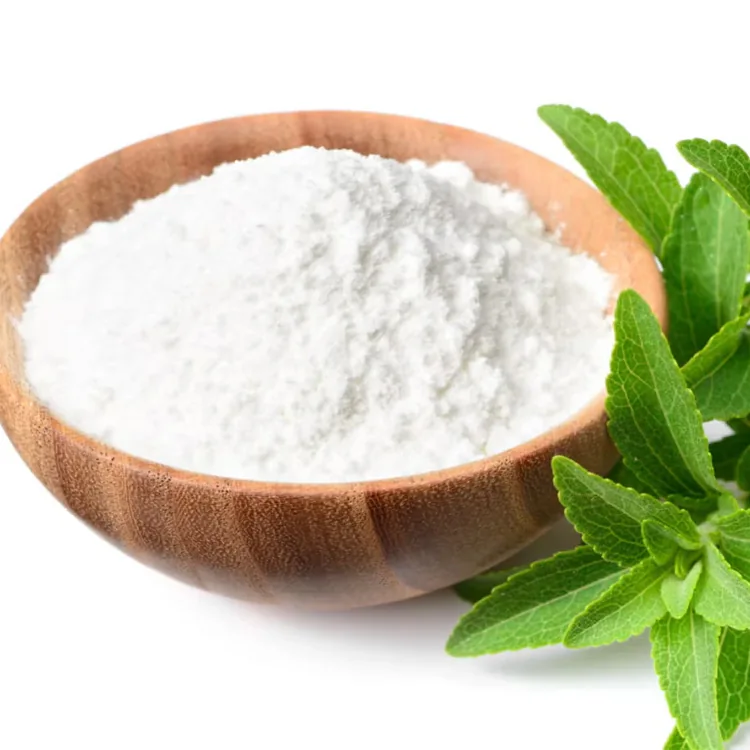
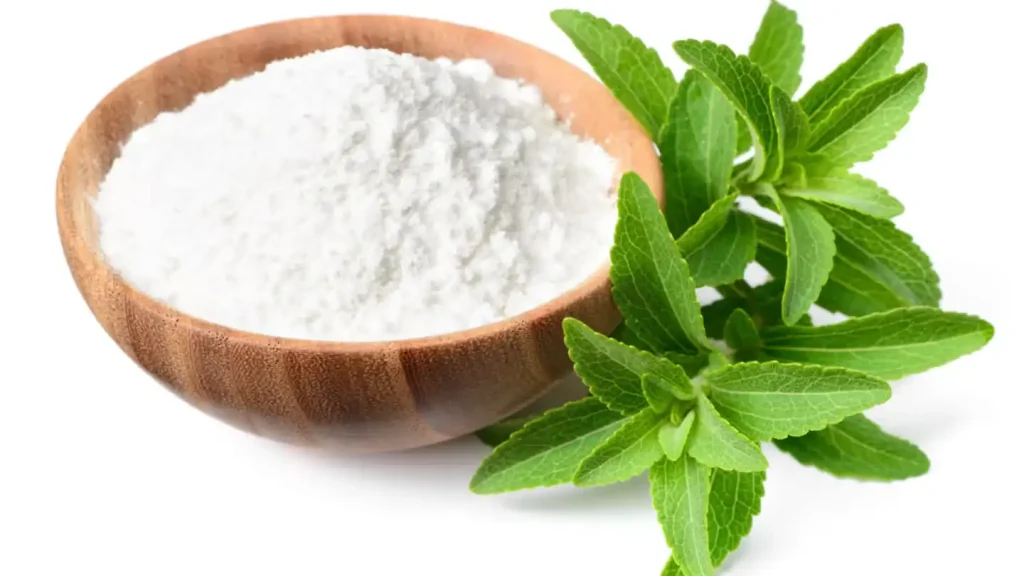
Steviol glycosides are a family of diterpene glycosides naturally occurring in the leaves of Stevia rebaudiana Bertoni, a plant indigenous to South America and traditionally used for centuries in Paraguay and Brazil. They are responsible for the characteristic sweetness of the stevia plant, with sweetness potency ranging from approximately 50 to over 400 times that of sucrose depending on the specific glycoside.
Structurally, all steviol glycosides share a common aglycone — steviol — to which different arrangements of glucose and rhamnose units are attached. This structural variation is what produces the diverse sensory and functional profiles across the steviol glycoside family.
The principal steviol glycosides of commercial relevance include:
- Stevioside — the most abundant glycoside in the leaf, typically 5–10% of dry leaf weight; known for a notable bitter and licorice-like aftertaste at higher concentrations
- Rebaudioside A (Reb A) — the most widely used commercial steviol glycoside; cleaner taste profile than stevioside, representing the backbone of most first-generation stevia powder products
- Rebaudioside D (Reb D) — a minor glycoside present in trace quantities in the leaf; substantially cleaner taste profile than Reb A, with reduced bitterness and lingering
- Rebaudioside M (Reb M) — present in the leaf at less than 0.1% concentration; widely regarded as the highest-quality steviol glycoside in terms of taste, closely mimicking sucrose’s clean sweetness profile
The metabolic pathway of steviol glycosides in the human body is well-characterized. Following ingestion, they pass largely undigested to the colon, where gut microbiota hydrolyze the glycoside to release steviol. Steviol is subsequently absorbed, conjugated in the liver, and excreted renally. Critically, steviol glycosides do not contribute calories, do not raise blood glucose, and have a glycemic index of zero — properties that make the stevia powder derived from them highly attractive for diabetic-friendly, keto, and low-glycemic formulations.
3. Regulatory Approval: What Businesses Need to Know Before Sourcing
Before specifying steviol glycosides as a raw material, procurement and regulatory affairs teams should verify market-specific approval status.
United States: The FDA has recognized steviol glycosides as Generally Recognized as Safe (GRAS) for use in food and beverages. Multiple GRAS notifications have been submitted and reviewed, covering Reb A, Reb D, Reb M, stevioside, and total steviol glycoside preparations.
European Union: Steviol glycosides are approved as food additive E 960 under Regulation (EC) No 1333/2008. The European Food Safety Authority (EFSA) has established an Acceptable Daily Intake (ADI) of 4 mg/kg body weight per day, expressed as steviol equivalents. Recent EU evaluations have extended coverage to additional minor glycosides including Reb M.
China: The National Health Commission of China has approved steviol glycosides as a permitted food additive, making them viable for products entering or manufactured for the Chinese market — a consideration of particular relevance when sourcing from a China-based steviol glycosides manufacturer.
Japan, Australia/New Zealand, Canada: All have approved steviol glycosides under their respective food additive frameworks.
Codex Alimentarius: The Joint FAO/WHO Expert Committee on Food Additives (JECFA) has evaluated and established an ADI for steviol glycosides, providing a globally recognized safety reference point.
The takeaway for product development teams: steviol glycosides enjoy among the broadest regulatory acceptance of any natural high-intensity sweetener globally, which significantly reduces market entry risk compared to some alternative sweeteners.
4. Reb D and Reb M: Why Next-Generation Steviol Glycosides Are Redefining Formulation
For many years, the dominant commercial form of stevia powder was high-Reb-A extract, typically standardized to 97% or 80% Reb A purity. While commercially successful, Reb A’s sensory limitations — particularly its bitter aftertaste and delayed onset — created formulation challenges, especially in beverages and dairy applications.
Reb D and Reb M have fundamentally changed this calculus.
Rebaudioside M has a branched glucose structure at the C-13 and C-19 positions that more closely resembles the molecular profile associated with clean sucrose-like sweetness. In sensory panel studies, Reb M consistently outperforms Reb A on aftertaste, bitterness, and overall sucrose mimicry. For businesses developing premium sugar-reduced beverages, functional nutrition products, or clean-label supplements, sourcing Reb M as a steviol glycosides raw material enables formulations that were previously only achievable with synthetic sweeteners.
Rebaudioside D occupies a comparable tier to Reb M in sensory quality, with slightly different sweetness kinetics that some formulators prefer in specific applications such as confectionery or protein supplements.
The historical challenge with both Reb D and Reb M was their extremely low natural abundance in the stevia leaf — typically below 0.5% and 0.1% of dry weight respectively. Extraction of sufficient quantities for commercial use was economically impractical for most of the industry’s history. This changed with the advent of biosynthesis and enzymatic bioconversion technologies, which allow manufacturers to produce Reb M and Reb D at commercial scale with high purity and batch-to-batch consistency. Businesses sourcing steviol glycosides bulk quantities of Reb M or Reb D should confirm whether the supply is derived from leaf extraction or bioconversion, and request corresponding documentation.
5. Steviol Glycosides Specifications: What to Look for When Evaluating Raw Materials
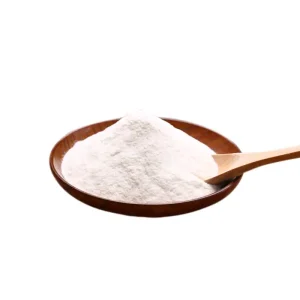
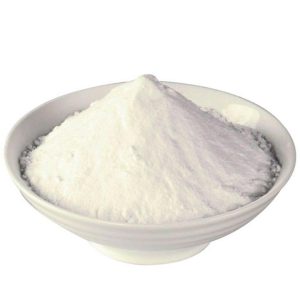
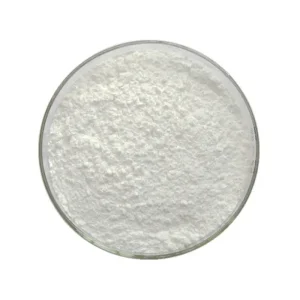
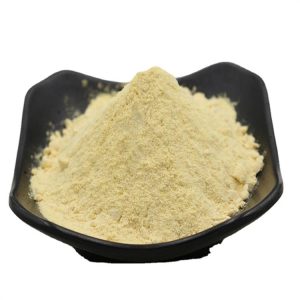
When evaluating steviol glycosides powder as a procurement category, the following specification parameters should be part of any supplier qualification process:
Purity and Assay Total steviol glycoside content should be specified as a percentage of dry weight. Common commercial grades include 95%, 97%, and 99% total steviol glycosides, with the specific glycoside profile (ratio of Reb A, Reb M, Reb D, stevioside, etc.) documented in the Certificate of Analysis.
Particle Size and Solubility For direct-blend supplement applications, powder flowability and particle size distribution affect downstream processing. For beverage applications, aqueous solubility at working pH and temperature should be verified. Many manufacturers offer both standard and micronized grades of steviol glycosides powder.
Heavy Metals and Pesticide Residues Given that stevia is an agricultural crop, procurement teams should require third-party testing data confirming compliance with relevant limits for lead, arsenic, cadmium, and mercury, as well as pesticide residue screening consistent with the importing market’s requirements (e.g., EU MRL regulations or US NOP standards for certified organic grades).
Microbiological Specifications Total aerobic plate count, yeast and mold counts, absence of Salmonella, and E. coli specifications should align with FCC, USP, or applicable national food safety standards.
Stability and Shelf Life Steviol glycosides are generally stable across a broad pH and temperature range, but specific stability data under your intended processing conditions (e.g., high-temperature pasteurization, acidic pH) should be requested from the supplier.
Certifications For regulated market categories, verify certifications relevant to your supply chain: ISO 9001, ISO 22000, GMP compliance, NSF, Halal, and Kosher are standard expectations for a qualified steviol glycosides manufacturer.
6. Bulk and Wholesale Sourcing: Strategic Considerations for Product Businesses
Businesses sourcing steviol glycosides bulk or steviol glycosides wholesale face a set of commercial and operational decisions that go beyond unit pricing.
Minimum Order Quantities and Lead Times Established manufacturers typically offer tiered pricing structures with meaningful price breaks at 25 kg, 100 kg, and metric ton quantities. For businesses in product development or early commercialization phases, confirming the availability of smaller development quantities — typically 1–5 kg — allows for formulation work before committing to bulk inventory.
Supply Chain Transparency Reputable steviol glycosides manufacturers should be able to provide full traceability documentation covering the stevia leaf source, extraction or bioconversion process, and quality control checkpoints. This is increasingly important for brand owners who publish supply chain transparency reports or operate in certified organic or non-GMO positioned categories.
Custom Glycoside Profiles Not all applications require the same steviol glycoside composition. Some beverage applications may require high-Reb-D blends for specific sweetness kinetics, while supplement applications may prioritize cost-efficient high-Reb-A grades. The ability to source customized glycoside profiles from a manufacturer with genuine R&D capability adds significant formulation flexibility.
Regulatory Documentation Support When entering new markets, your supplier’s ability to provide market-specific regulatory support documentation — including dossiers, safety data, and specification sheets formatted for specific regulatory authorities — can meaningfully accelerate your product registration timeline.
OEM/ODM Manufacturing For businesses that want to go beyond raw material procurement and source finished ingredient blends or custom formulations, working with a manufacturer that offers OEM and ODM services provides additional supply chain consolidation.
7. Application Areas: Where Steviol Glycosides Create the Most Commercial Value
Understanding where steviol glycosides deliver the strongest formulation outcomes helps procurement teams prioritize their sourcing investment.
Dietary Supplements and Nutraceuticals Protein powders, meal replacement formulas, greens powders, and functional gummies frequently use steviol glycosides as the primary sweetening system. The zero-calorie and zero-glycemic properties align well with sports nutrition and metabolic health positioning. Reb A grades are standard; Reb M or Reb D are increasingly specified in premium product lines.
Functional Beverages Ready-to-drink protein beverages, energy drinks, enhanced waters, and functional teas benefit from steviol glycosides’ stability across pH ranges and its compatibility with most standard beverage processing conditions. High-purity Reb M is particularly valued in this category.
Baked Goods and Confectionery While the bulking function of sugar must be addressed separately, steviol glycosides can effectively replace sugar’s sweetness contribution in reduced-sugar baked goods. Stability under baking temperatures is well-established.
Dairy and Dairy Alternatives Yogurt, flavored milk, and plant-based dairy alternatives are among the highest-volume applications for Reb A globally. Reb M’s improved sensory profile is gaining traction in premium dairy-alternative products.
Pharmaceutical Formulations Chewable tablets, oral suspensions, and liquid pharmaceuticals use steviol glycosides as excipient sweeteners, particularly in pediatric formulations and diabetic patient products where sucrose is contraindicated.
Summary
Steviol glycosides represent a mature, globally regulated, and commercially proven category of natural sweetener raw materials. Driven by regulatory restrictions on added sugars across major markets and sustained consumer demand for clean-label, low-glycemic products, the commercial case for reformulating with steviol glycosides has never been stronger. For product businesses evaluating steviol glycosides powder, bulk quantities, or wholesale supply relationships, the critical success factors are supplier qualification rigor, specification clarity, and an understanding of how different glycoside profiles — particularly Reb A, Reb D, and Reb M — translate into real-world formulation performance. Sourcing from a qualified steviol glycosides manufacturer with demonstrated analytical capability, transparent supply chain documentation, and relevant market certifications is foundational to building a reliable ingredient supply strategy in this category.
FAQ
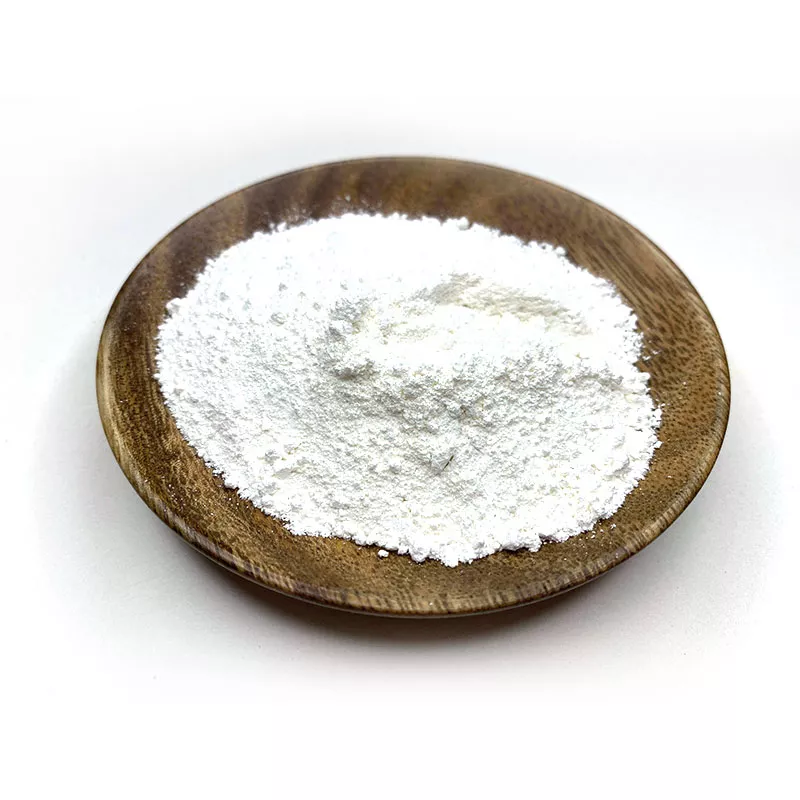
Q1: What is the difference between stevia powder and steviol glycosides powder? “Stevia powder” is a broad commercial term that can refer to dried whole-leaf stevia, crude leaf extract, or purified steviol glycoside extract. Steviol glycosides powder specifically refers to the purified extract containing one or more steviol glycoside compounds at a defined concentration. For food, beverage, and supplement manufacturing purposes, steviol glycosides powder at specified purity (e.g., 95% or 97% total steviol glycosides) is the appropriate procurement specification. Always confirm the assay and glycoside profile with your supplier before specifying.
Q2: How do I decide between Reb A, Reb D, and Reb M for my application? The primary decision driver is sensory performance relative to cost. Reb A is the most cost-efficient grade and performs well in applications where aftertaste is masked by other flavor components (e.g., flavored protein powders, highly acidic beverages). Reb D and Reb M deliver substantially improved clean sweetness and reduced aftertaste, making them preferable for products with minimal flavor masking — such as plain beverages, unflavored supplements, or premium clean-label formulations. Usage rate and cost-per-use calculations should be conducted for each grade against your target sweetness level.
Q3: Are steviol glycosides approved for use in organic-certified products? This varies by jurisdiction and certifying body. In the United States, the USDA National Organic Program permits stevia extract as a non-organic agricultural ingredient under specific conditions. EU organic regulations are more restrictive. Businesses targeting organic-certified products should verify approval status with their certifying body and request appropriate documentation from their steviol glycosides raw material supplier.
Q4: What is a typical usage rate for steviol glycosides powder in a supplement formulation? Usage rates vary significantly depending on the glycoside profile, the formulation matrix, and target sweetness level. As a general reference, Reb A at 97% purity is typically used at 0.01–0.1% of formulation weight to achieve sweetness equivalent to 5–10% sucrose. Reb M and Reb D are used at comparable or slightly lower rates due to their higher sweetness intensity and absence of masking requirements. Formulators should conduct sensory benchmarking at multiple usage levels during development.
Q5: What documentation should I request from a steviol glycosides manufacturer before placing a bulk order? At minimum, request the following: Certificate of Analysis (CoA) for the specific lot, technical data sheet, heavy metal testing report, pesticide residue report, microbiological testing report, safety data sheet (SDS), and copies of relevant certifications (GMP, ISO, Halal, Kosher, NSF where applicable). For businesses operating in regulated supplement or pharmaceutical categories, a manufacturer’s questionnaire or supplier audit report may also be appropriate.
Q6: Can steviol glycosides be combined with other sweeteners in formulation? Yes, and this is common practice. Steviol glycosides are frequently used in combination with erythritol, allulose, monk fruit extract, or inulin to round out sweetness profile, provide bulk, and optimize cost-in-use. Synergistic sweetness enhancement between steviol glycosides and some polyols is well-documented, allowing total usage rates of each component to be reduced.
About GOTHINK Biotech
GOTHINK Biotech is a professional manufacturer and global supplier of functional raw materials headquartered in China, serving nutraceutical, supplement, food and beverage, and pharmaceutical businesses worldwide. Our product portfolio spans multiple categories relevant to modern formulation needs, including Steviol Glycosides (Reb M, Reb D) and a comprehensive range of complementary functional ingredients.
Our current product lines include Coenzymes (NMN, NMNH, NAD+, NADH, NADP, Coenzyme Q10, Folic Acid), Human Milk Oligosaccharides (2′-FL, 3-FL, LNT, LNnT), Glucosamine Series (Glucosamine, Glucosamine Hydrochloride, N-Acetyl-Glucosamine, Glucosamine Sulfate), and Saccharide Derivatives (Sialic Acid, N-Acetylneuraminic Acid, Reb D, Reb M, Rh2/Rg3).
GOTHINK Biotech holds ISO 9001, ISO 22000, GMP, SGS, NSF, CQC, Halal, and Kosher certifications, and provides full third-party testing documentation for complete supply chain traceability. Our R&D team, led by scientists with training from US and UK institutions, develops over 2,000 customized formulations annually and offers OEM/ODM manufacturing services for partners requiring tailored solutions. Businesses seeking reliable steviol glycosides bulk supply, custom glycoside profiles, or consolidated ingredient sourcing are welcome to contact our team for technical consultation and quotation.