
Abstract
NADH (nicotinamide adenine dinucleotide, reduced form) and NAD+ (oxidized form) are essential coenzymes involved in hundreds of metabolic reactions, particularly in energy production. The conversion of NADH to NAD+ is a fundamental oxidation process that drives ATP synthesis in cells. This article explains the biochemical mechanism, biological significance, and factors influencing this cycle. As an experienced NADH raw material manufacturer specializing in high-purity NADH powder for bulk and wholesale supply, we provide science-backed insights to help supplement brands source reliable ingredients for energy and longevity formulations.
What Are NADH and NAD+?
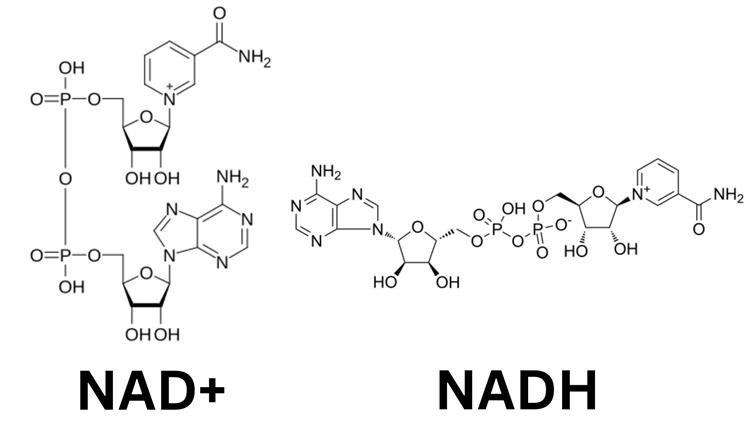
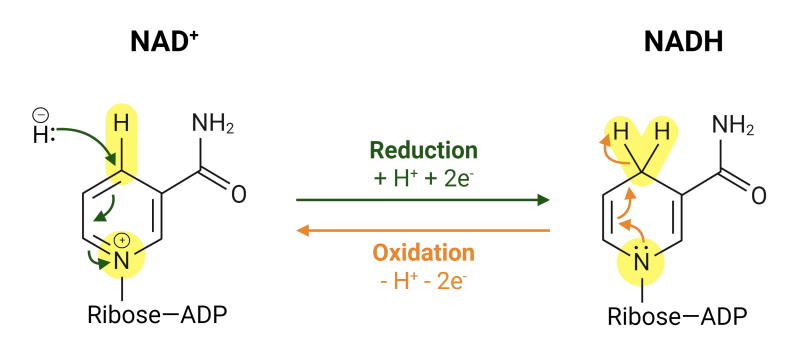
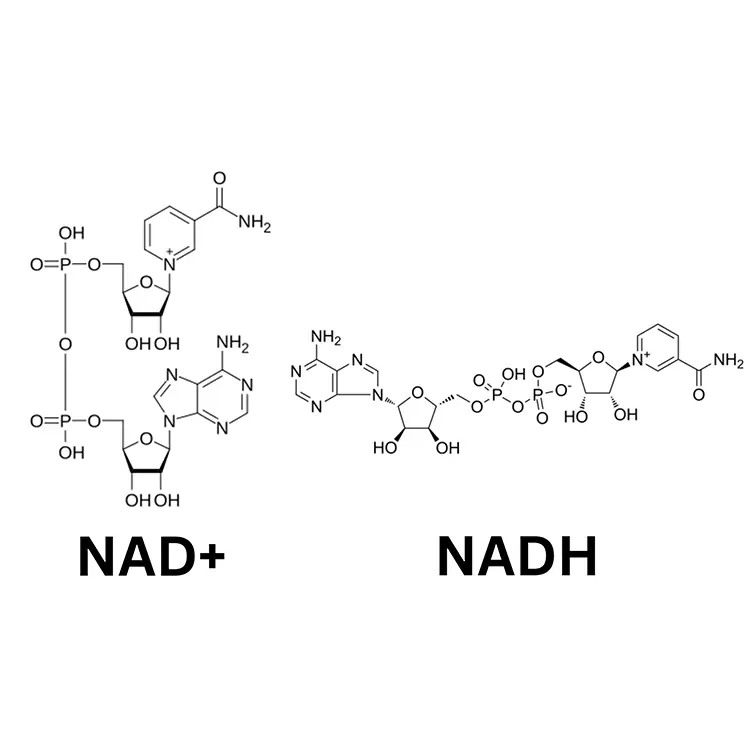
NAD+ and NADH are two interconvertible forms of the same molecule. NAD+ is the oxidized form, while NADH is the reduced form carrying two electrons and a proton.
These coenzymes act as electron carriers in redox reactions throughout metabolism:
- NAD+ accepts electrons to become NADH during catabolic processes (e.g., glycolysis, Krebs cycle).
- NADH donates electrons to become NAD+ during ATP production in the electron transport chain.
This constant cycling is critical for cellular respiration and energy homeostasis.
The Biochemical Mechanism: How NADH Becomes NAD+
The conversion of NADH to NAD+ occurs primarily through oxidation in the mitochondrial electron transport chain:
- NADH donates its electrons to Complex I (NADH dehydrogenase).
- Electrons travel through Complexes I–IV, creating a proton gradient.
- The proton gradient powers ATP synthase to produce ATP.
- At Complex IV, electrons combine with oxygen and protons to form water.
- NAD+ is regenerated and released back into the matrix for reuse.
The net reaction is: NADH + H⁺ + ½O₂ → NAD⁺ + H₂O
This process yields approximately 2.5 ATP molecules per NADH oxidized under physiological conditions.
Smaller amounts of NADH oxidation also occur in the cytosol via shuttle systems (malate-aspartate and glycerol-3-phosphate shuttles) that transfer reducing equivalents into mitochondria.
Biological Importance of the NADH/NAD+ Cycle
Maintaining an optimal NAD+/NADH ratio is vital for:
- Energy production and mitochondrial function
- Activation of sirtuins and PARPs involved in longevity and DNA repair
- Redox balance and antioxidant defense
- Regulation of metabolic pathways
Declining NAD+ levels with age have spurred interest in precursors and direct NADH supplementation using high-quality raw materials.
Factors Affecting NADH to NAD+ Conversion
Efficiency of the cycle depends on:
- Mitochondrial health and oxygen availability
- Enzyme activity (e.g., Complex I efficiency)
- Dietary and supplemental NAD+ precursors (NR, NMN)
- Direct supply of stable NADH powder in research and formulations
As a specialized NADH manufacturer, we emphasize pharmaceutical-grade stabilization techniques to preserve activity in bulk NADH raw material.
Applications in Dietary Supplements
High-purity NADH powder is increasingly used in energy, cognitive, and anti-aging supplements. When sourced from reputable NADH manufacturers offering wholesale and bulk options, brands can develop stable, bioavailable products. Combining NADH with precursors supports both sides of the redox cycle for comprehensive cellular support.
Summary
The conversion of NADH to NAD+ is a cornerstone of cellular energy production, occurring mainly through mitochondrial oxidative phosphorylation. This redox cycle sustains ATP synthesis and influences longevity pathways. Supplement brands seeking to formulate with NADH benefit from partnering with experienced manufacturers that provide pure, stable NADH powder and raw material in bulk quantities. Understanding this mechanism underscores the value of quality ingredients in supporting metabolic health.
FAQ
Q: How does NADH become NAD+ in the body? A: Primarily through oxidation in the mitochondrial electron transport chain, where NADH donates electrons to Complex I, regenerating NAD+ while contributing to ATP production.
Q: Why is the NADH/NAD+ ratio important? A: A higher NAD+/NADH ratio supports efficient energy metabolism, sirtuin activation, and cellular repair processes.
Q: Can supplementing with NADH powder help the cycle? A: Yes—high-quality NADH raw material provides direct reduced form support, particularly useful in energy-focused formulations when sourced from reliable manufacturers.
Q: Where can brands source bulk NADH for supplements? A: Trusted NADH manufacturers offer pharmaceutical-grade NADH powder for wholesale and private label production, ensuring stability and purity.
Q: Is NADH the same as NAD+? A: No—they are interconvertible forms. NADH is reduced (electron-rich); NAD+ is oxidized and accepts electrons during metabolism.